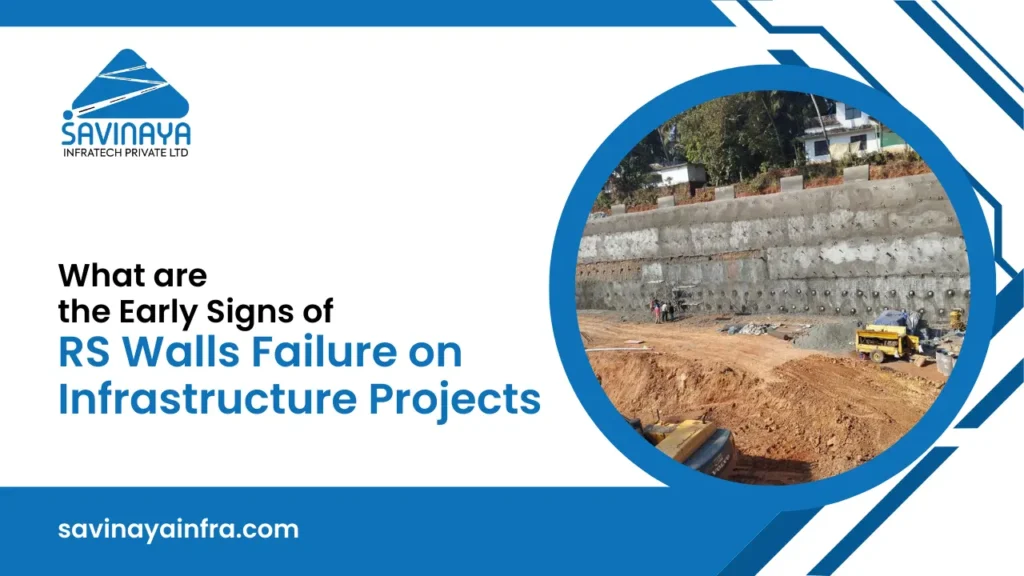
Reinforced Soil (RS) walls are widely used in highways, railways, flyovers, and infrastructure projects because of their cost-effectiveness, speed of construction, and flexibility. However, like any engineered structure, RS walls can experience distress if there are issues in design, materials, construction, or long-term performance.
Identifying the early signs of RS wall failure is critical. Timely detection allows corrective measures before the problem escalates into major structural failure, serviceability issues, or safety hazards.
This blog highlights the early warning signs of RS wall failure, their possible causes, and why proactive monitoring is essential.
Key Takeaways
- Early signs of RS wall distress must be identified to prevent major structural failure.
- Common warning signs include cracks, panel misalignment, bulging, settlement, and water seepage.
- Poor drainage, inadequate compaction, overloading, and design flaws are common causes of failure.
- Timely repairs can prevent costly reconstruction and safety hazards.
- Regular inspections and proactive maintenance ensure long-term wall stability.
Table of Contents
What are RS Walls?
Reinforced Soil Walls (RS walls) are gravity retaining systems made by combining compacted soil with reinforcements such as steel strips or geogrids, and front-facing concrete panels. The reinforced mass behaves like a coherent block to retain backfill and resist lateral pressures.
Due to their performance under varied ground conditions, reinforced soil walls have become a preferred choice in modern infrastructure.
Why Early Detection of RS Wall Failure is Important?
Timely identification of the early signs of RS wall failure can help prevent catastrophic issues. When symptoms like cracks, bulging, or settlement are spotted early, they allow for non-invasive RS wall repair solutions to be applied.
Delaying corrective action can lead to:
- Expensive structural repairs
- Traffic disruptions
- Safety hazards
- Full RS wall structural failure
Early action = safe, economical, and efficient maintenance.
Top 10 Early Warning Signs of RS Wall Failure
Recognizing early signs of trouble in reinforced soil walls can help you take action before the damage becomes serious. Here are the top warning signs to watch for.
1. Facing Panel Cracks
What to look for:
- Hairline cracks on precast panels
- Diagonal/vertical cracks near anchors
- Widening over time
Possible causes:
- Differential settlement
- Improper panel stacking
- Poor concrete quality
While minor, these may indicate hidden reinforced soil wall problems. They’re key RS wall failure signs that need close observation.
2. Panel Misalignment and Gaps
Symptoms:
- Uneven joints
- Opening gaps
- Tilting or rotation
Causes include poor construction tolerance, bracing, or settlement of reinforced fill. Misalignment is more than cosmetic it’s a visible RS wall distress sign.
3. Bulging or Outward Movement of Wall Face
What to look for:
- Localized bulging
- Wall displacement
- Deviation from vertical alignment
It may result from:
- Inadequate reinforcement
- Poor backfill compaction
- Increased surcharge loads
Bulging often precedes reinforced soil wall failure and must not be ignored.
4. Settlement at the Top of the Wall
Visible indicators:
- Depressions behind coping
- Cracks in pavement or parapets
- Uneven surface
This can point to:
- Compressible or poorly compacted backfill
- Foundation issues
- Long-term performance decline
These are clear early signs of RS wall failure.
5. Drainage-Related Symptoms
Red flags:
- Water seepage
- Efflorescence
- Wet or muddy wall base
Causes:
- Blocked drainage
- Missing filter layers
- Poor geotextile placement
Drainage failure raises pore pressure, weakening the wall. It’s one of the top causes of RS wall failure.
6. Corrosion or Damage to Connectors
What to monitor:
- Rust stains
- Spalling near connectors
- Exposed metallic elements
Usually from:
- Poor corrosion protection
- Aggressive groundwater
- Subpar connector materials
This weakens reinforcement-facade bonding and requires immediate RS wall rehabilitation
7. Backfill Erosion or Loss of Fines
Signs include:
- Soil washout
- Voids behind panels
- Sinkholes near face
Without filters, water removes fine soil, reducing effective reinforcement anchorage. It’s a serious RS wall failure sign.
8. Tilted or Damaged Coping Beams
Coping beams going out of level or showing cracks may indicate long-term movement or foundation instability an overlooked reinforced soil wall sign.
9. Vegetation or Root Intrusion
Roots through joints can crack panels, retain moisture, and degrade materials. This is a subtle but relevant R S wall problem.
10. Surface Deformation in Adjacent Areas
Cracks or settlements in pavements near the wall may signal internal instability. Watch out for these hidden reinforced soil walls causes.
You May Also Read: How Do You Increase the Stability of a Retaining Wall with Soil Nailing
Common Causes & Repair Solutions for RS Wall Failure
Understanding what leads to RS wall failure—and how to fix it—can help you plan the right solution and avoid repeat issues.
Common Causes:
- Poor construction methods
- Insufficient compaction
- Faulty drainage
- Overloading
- Inadequate design
Repair Solutions:
- Recompaction
- Re-facing and reinforcement retrofitting
- Drainage system installation
- Backfill replacement
- Engaging an expert RS wall repair contractor for technical assessment
You May Also Read: How Soil Nailing Restores Failing Reinforced Earth Walls
Are RS Wall Failures Always Caused by Poor Construction?
Not always. Though construction flaws are common, RS wall failure may also stem from:
- Unforeseen load changes
- Soil erosion
- Natural disasters
- Poor maintenance
Partnering with an experienced RS wall stabilisation contractor is essential for accurate root cause identification and remediation.
What Preventive Measures to Avoid RS Wall Failure
Taking the right preventive steps early can greatly reduce the chances of RS wall failure and ensure long-term stability.
- Routine inspections for RS wall distress signs
- Use of high-quality geosynthetics
- Proper drainage maintenance
- Monitoring the surrounding infrastructure
- Applying timely RS wall stabilisation methods
How Savinaya Infratech Helps Repair & Rehabilitate Reinforced Soil Walls?
At Savinaya Infratech, we specialize in the repair, stabilization, and rehabilitation of reinforced soil walls. From identifying the early signs of RS wall failure to implementing advanced RS wall repair solutions, our expert team ensures long-term performance and safety.
Whether it’s retrofitting or complete RS wall rehabilitation, we deliver solutions tailored to your project’s needs. Get in touch with us to discuss your RS wall repair needs.
Conclusion
RS walls are high-performance systems when properly constructed and maintained. But no wall is immune to wear, environmental change, or design oversights. By paying attention to the early signs of RS wall failure, engineers and asset owners can avoid major disruptions, protect infrastructure, and save on costly future repairs. As always in geotechnical engineering, proactive care is far more effective than reactive repair.
1. What are the main signs of RS wall failure?
Common signs of RS wall failure include cracks in facing panels, bulging or outward movement of the wall, gaps or misalignment between panels, and settlement at the top. Water seepage, staining, erosion of backfill, and corrosion of connectors may also indicate deeper structural or drainage problems that require prompt attention.
2. How long should an RS wall last?
A properly designed and constructed RS wall can last 50 to 75 years or more. Its lifespan depends on material quality, environmental conditions, drainage performance, and regular maintenance. Routine inspections help extend its service life.
3. What do geotechnical experts look for while investigating RS walls?
Experts assess wall alignment, bulging, tilting, cracking, drainage performance, settlement, and erosion. They may also inspect connectors, reinforcement elements, backfill quality, and conduct subsurface testing to identify the root cause of distress.
4. Can RS wall failures be repaired without dismantling the wall
Yes, many failures can be repaired without full dismantling if detected early. Techniques such as soil nailing, pressure grouting, drainage improvements, panel realignment, and added reinforcement can restore stability. Severe damage, however, may require partial reconstruction.
5. Are RS walls suitable for all infrastructure projects?
RS walls are suitable for highways, railways, bridges, and steep embankments, especially where space is limited. However, their suitability depends on soil conditions, load requirements, drainage, and groundwater levels. A geotechnical assessment is necessary before selection.