
REINFORCED SOIL WALLS
(RS) REPAIR & STRENGTHENING SERVICES
ISO 9001:2005 Certified
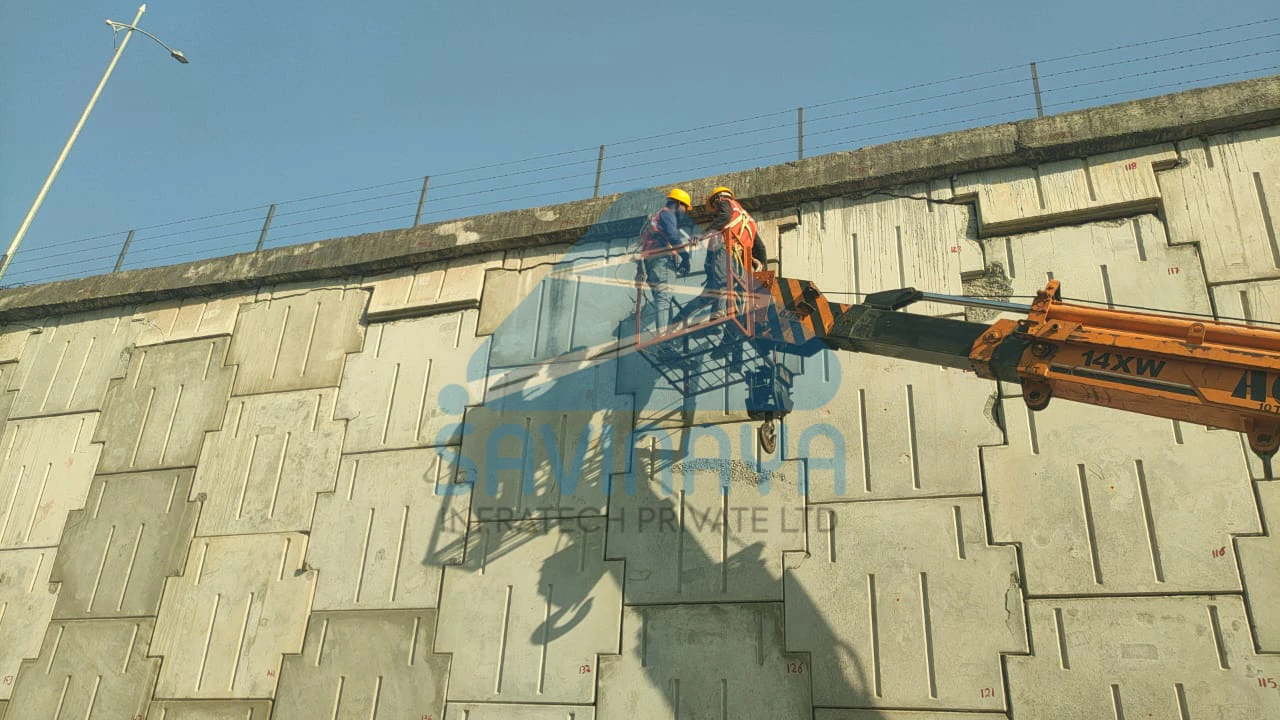
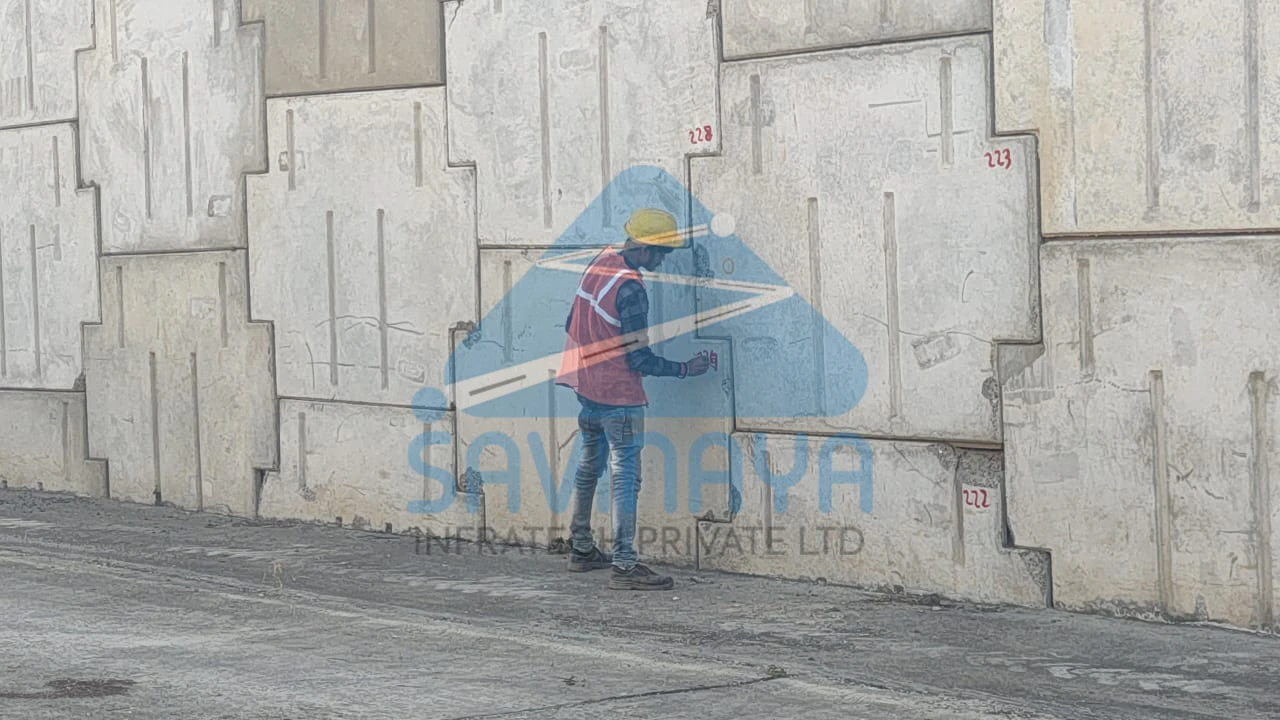
Reliable RS wall Repair & Strengthening Using Soil Nailing
Savinaya Infratech delivers dependable reinforced soil wall repair and strengthening services for distressed reinforced soil wall or rs walls across highways, railways, and bridge approaches. As experienced infrastructure wall rehabilitation experts, we stabilize distressed structures using advanced soil nailing systems and engineered corrective measures.
Our specialists execute reinforced earth wall repair & rehabilitation, panel alignment correction, structural anchoring, and load capacity improvement with technical precision. Backed by systematic quality protocols and strong field expertise, we deliver durable outcomes, regulatory compliance, and minimal interference with ongoing infrastructure activities.
What are RS Walls?
A reinforced soil wall is an engineered retaining structure constructed by combining compacted soil with reinforcement materials such as geogrids, metallic strips, or geotextiles. Commonly referred to as RS walls, these systems are widely used in MSE wall construction, bridge abutments, embankments, and flyovers.
The rs wall meaning refers to a reinforced earth system designed to resist lateral earth pressure and heavy surcharge loads. Proper reinforced soil wall construction ensures structural stability, flexibility, and cost efficiency. These walls are preferred in modern infrastructure because they accommodate settlement while maintaining long-term performance and strength.
Different Types of RS Walls
There are several types of reinforced soil walls used in infrastructure projects. Understanding reinforced soil wall classification helps determine appropriate repair, strengthening, and rehabilitation strategies.
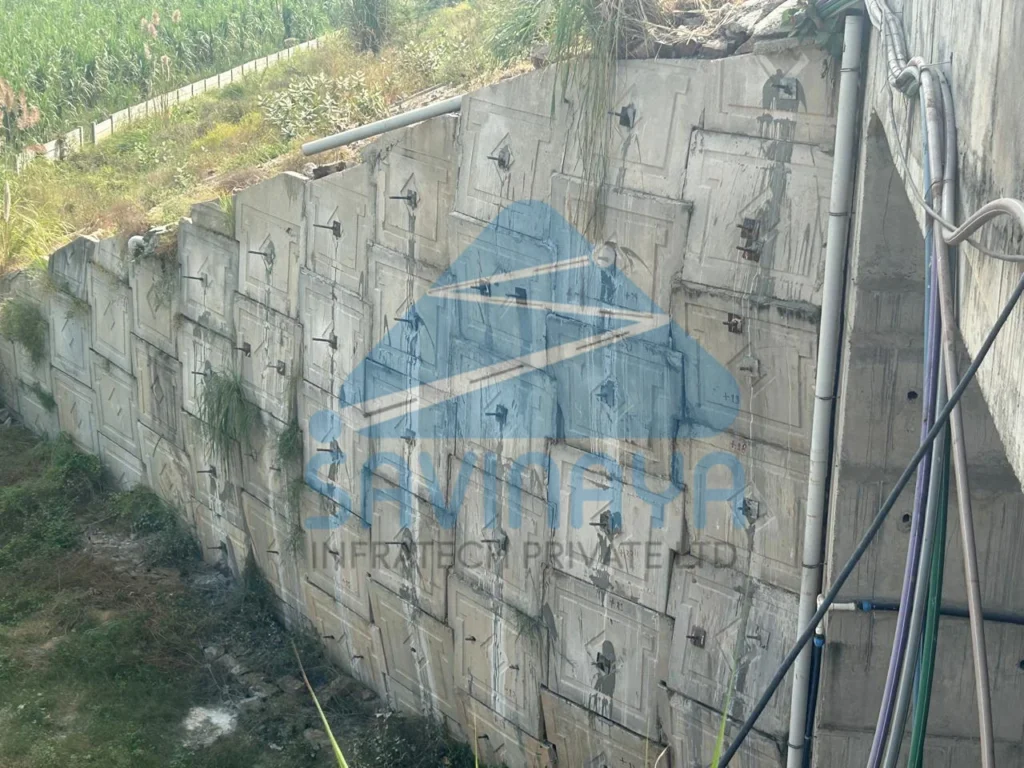
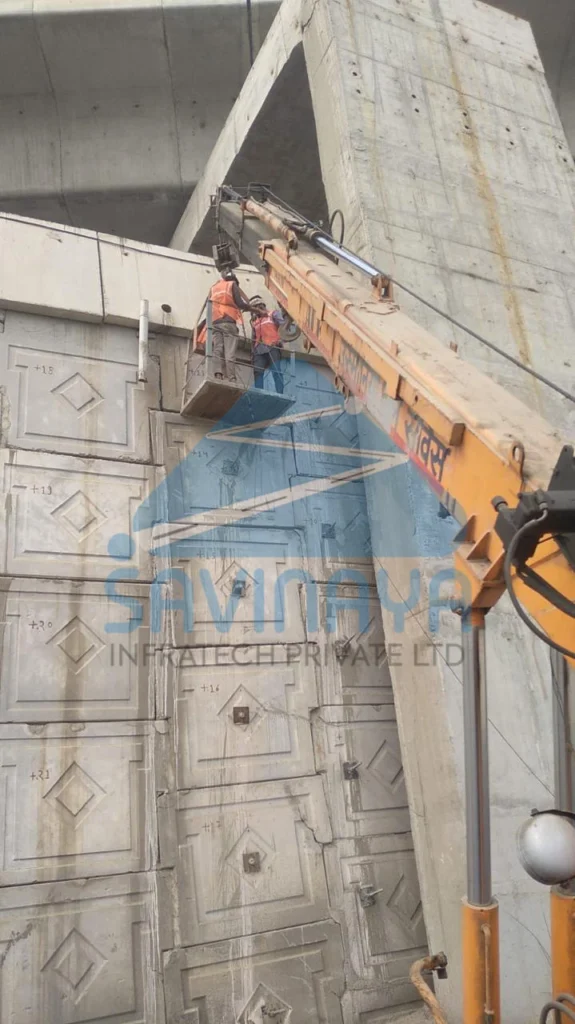
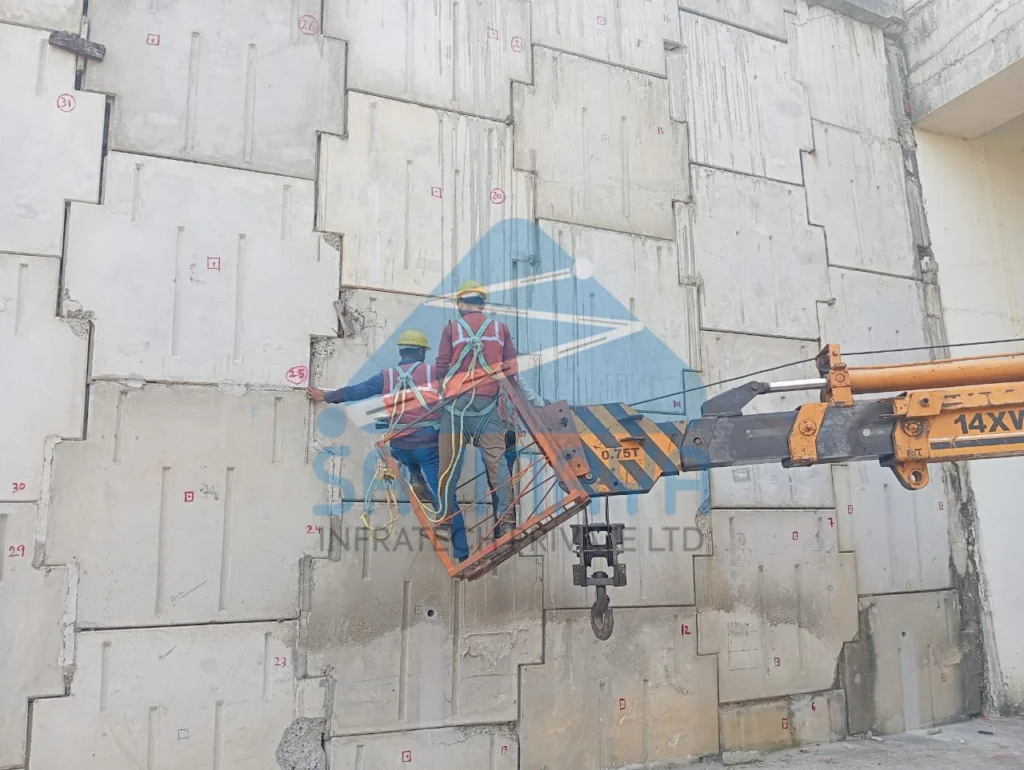
Panel Reinforced Soil Wall System
Panel reinforced soil walls use precast concrete panels as the facing element, which are connected to reinforcement layers placed within the soil mass.
This system is widely used in highway projects, railway embankments, bridge approaches, and large infrastructure developments because it provides:
• High structural strength
• Durable facing system
• Ability to support taller retaining walls
• Long-term structural reliability
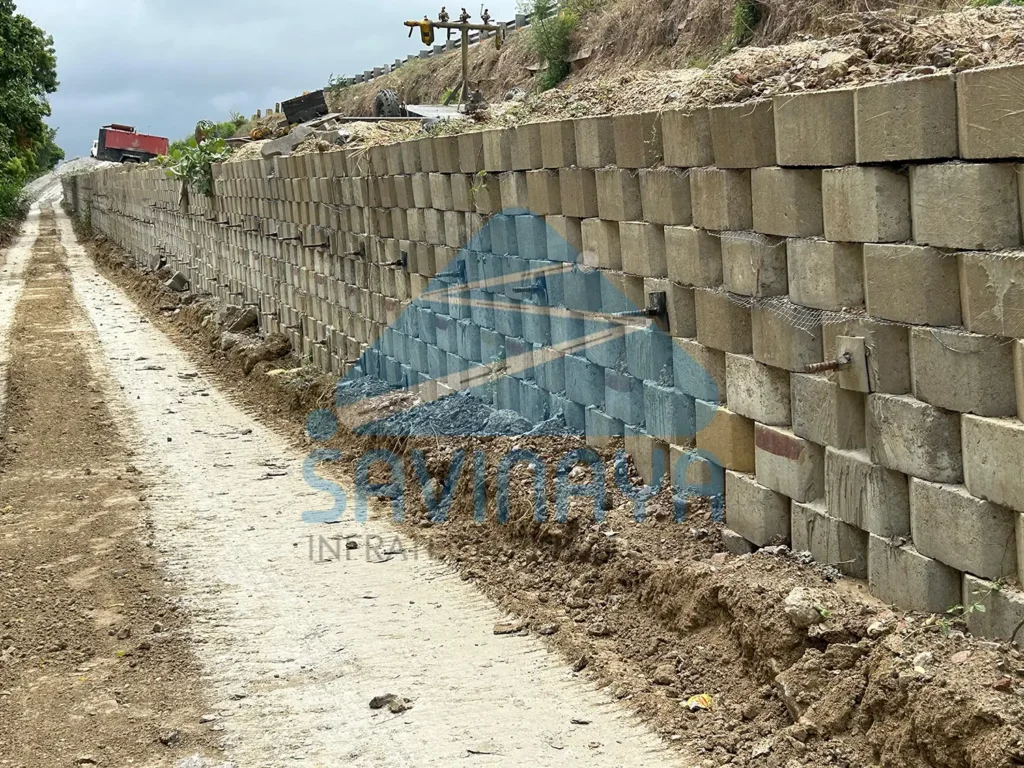
Modular Block Reinforced Soil Walls
Modular block reinforced soil retaining wall systems use interlocking concrete blocks as facing elements integrated with reinforcement layers behind the wall. These systems provide structural strength, aesthetic finish, and simplified installation, making them suitable for urban and infrastructure developments.
Wraparound Reinforced Soil Wall System
The wraparound reinforced soil wall system uses geotextile or geogrid reinforcement layers that wrap around the front face of the wall to form the facing structure.
This type of system is commonly used in:
• Reinforced soil slopes
• Temporary retaining structures
• Low-to-medium height embankments
Wraparound systems are economical, flexible, and quick to construct, especially where concrete facing panels are not required.
Gabion Facia Reinforced Soil Wall
Gabion facia reinforced soil wall systems use wire mesh baskets filled with stones as the facing element. These RS walls provide excellent drainage, flexibility, and erosion resistance, making them ideal for riverbanks, highways, and slope protection. They are widely used in durable and cost-effective reinforced soil wall construction projects.
Benefits of RS Wall Repair & Strengthening
Professional reinforced soil wall repair & strengthening improves structural integrity, extends service life, increases load resistance, and ensures continued safety of critical infrastructure assets.
Restores wall stability
Timely reinforced soil wall repair corrects further bulging, settlement, and reinforcement distress, restoring structural balance & ensuring the wall performs safely under design loads.
Minimized Disruption
Advanced soil nailing wall strengthening techniques reduce excavation and traffic interference, enabling faster rehabilitation with minimal disturbance to ongoing site operations.
Improves load capacity
Strategic reinforced earth wall rehabilitation enhances soil-reinforcement interaction, increasing tensile resistance, & enabling the wall to safely accommodate additional surcharge loads.
Prevents sudden failure
Early intervention through professional RS wall repair services reduces structural risks, prevents progressive damage, and protects surrounding infrastructure from unexpected collapse.
why choose savinaya infratech
Savinaya Infratech is a trusted reinforced soil wall repair contractor delivering specialized RS wall rehabilitation and strengthening solutions for critical infrastructure projects.
Strong Geotechnical Expertise
Our engineers apply advanced soil analysis, stability assessment, and structural evaluation techniques to design technically sound reinforced soil wall construction and repair strategies suited to complex site conditions.
Proven RS Wall Rehabilitation Experience
As an established RS wall repair company, we have executed multiple MSE walls repair and reinforced earth wall repair assignments across highways, railways, and bridge infrastructure projects.
Site-Specific Solutions
We customize every RS strengthening solution based on soil properties, wall distress patterns, loading conditions, and long-term performance requirements for sustainable outcomes.
Safety-Driven Execution
Our RE wall repair and strengthening approach prioritizes safety compliance, controlled execution, and continuous monitoring to ensure reliable rehabilitation without compromising operational stability.
ISO 9001:2005 Certified
As an ISO 9001:2005 Certified soil nail wall rehabilitation contractor, we follow stringent quality management systems to deliver consistent, durable, and performance-driven RS repair services.
Techniques We Use for RS Wall Repair & Strengthening
We provide engineered reinforced soil wall repair and strengthening services using advanced stabilization and reinforcement techniques designed for long-term structural reliability.
- Soil Nailing: Our reinforced soil nail wall repair solutions strengthen unstable soil masses by installing steel nails, improving shear resistance and overall wall stability.
- Panel/Block RE wall Stabilization: We correct misaligned or Bulged reinforced earth walls using anchoring and structural support systems to restore alignment and integrity.
- Soil Reinforcement: Additional reinforcement layers are integrated into distressed reinforced soil walls to improve load transfer, tensile strength, and long-term performance.
- Ground Anchoring: Ground anchors enhance pull-out resistance in weakened reinforced soil retaining wall systems, providing added structural restraint and durability.
Applications/ Uses of RS Wall Repair
Our reinforced soil wall repair and rehabilitation solutions are widely applied in highways, bridge approaches, railway embankments, industrial yards, and urban retaining structures.
FAQs
Our evaluation begins with a comprehensive site investigation that includes structural condition review, surface distress documentation, settlement monitoring, drainage assessment, and stability verification through engineering analysis. We study reinforcement performance and soil behavior to determine whether reinforced soil wall repair is technically viable or if reconstruction is necessary. For a professional condition assessment, you may contact Savinaya Infratech for expert guidance.
Yes. In most cases, RS walls can be repaired using soil nailing, anchoring, panel stabilization, and additional reinforcement without complete dismantling. Reconstruction is considered only when structural failure is extensive or reinforcement layers are severely compromised.
Project duration depends on wall height, extent of distress, site access, and traffic conditions. Minor stabilization may take a few weeks, while large-scale reinforced soil wall strengthening projects can take several months. A detailed site assessment defines the execution timeline.
If the wall shows localized damage, minor settlement, or facing issues, repair is sufficient. If structural capacity is inadequate due to increased loads, design changes, or reinforcement distress, strengthening measures such as soil nailing or anchoring are recommended.
Warning signs include bulging panels, cracking, excessive settlement, water seepage, tilting, or reinforcement exposure. Early technical evaluation prevents progressive failure and reduces long-term rehabilitation costs. If you observe any of these signs, it is advisable to get in touch with Savinaya Infratech for a professional inspection.
When properly engineered and executed, reinforced soil wall repair can provide long-term structural performance. Permanent stability depends on accurate diagnosis, appropriate strengthening techniques, and proper drainage management.
A properly designed and constructed reinforced soil wall typically has a service life of 75–100 years, depending on reinforcement type, environmental exposure, load conditions, and maintenance practices.
Yes. RS walls are widely used in railway embankments, bridge approaches, and yard developments due to their flexibility, load-bearing capacity, and ability to accommodate settlement under dynamic loading.
Common causes include poor drainage, inadequate compaction, design errors, reinforcement corrosion, excessive surcharge loads, foundation settlement, and lack of timely maintenance.
Cost depends on damage severity, wall height, access constraints, and strengthening method required. Early intervention is significantly more cost-effective than full reconstruction. For a project-specific cost evaluation, contact Savinaya Infratech
Yes. Poor drainage and water infiltration can reduce soil strength, increase hydrostatic pressure, cause erosion, and accelerate reinforcement deterioration, leading to instability.
Reinforced soil wall repair involves stabilization of the reinforced fill mass and internal reinforcement layers, not just surface-facing elements. Conventional retaining wall repair typically focuses on concrete or masonry structural components rather than soil reinforcement interaction systems.