Rock slopes look solid and permanent, but in reality, they are constantly changing due to weather, water, and gravity. Over time, even a stable-looking slope can develop hidden weaknesses that turn into dangerous rockfalls. If you own, manage, or work near a rocky hillside, cutting, or high embankment, spotting the early warning signs of rockfall can help you act before a serious incident occurs.
Understanding the signs of rockfall protection needs is not just about compliance or safety audits; it’s about protecting people, infrastructure, and long-term investments. When you pay attention to subtle changes on and around your slope, you can decide when you need slope stabilization, rockfall mitigation, or more advanced rockfall protection systems.
In this guide, we’ll walk through five clear warning signs that your slope may require rockfall protection explain what can happen if you ignore the risks, outline common rockfall prevention methods, and share how specialist solutions can help stabilize high‑risk rock faces.
Key Takeaways
- Rock slopes change over time and can hide growing weaknesses.
- Loose rocks, recurring debris, seepage, cracks, and overhangs are key warning signs.
- Ignoring these signs leads to higher safety risks and long‑term costs.
- Rockfall nets, barriers, stabilization, and drainage are common protection measures.
- Specialist, site‑specific solutions help make high‑risk slopes safer and more reliable.
Table of Contents
5 Warning Signs Your Slope Needs Rockfall Protection Solutions
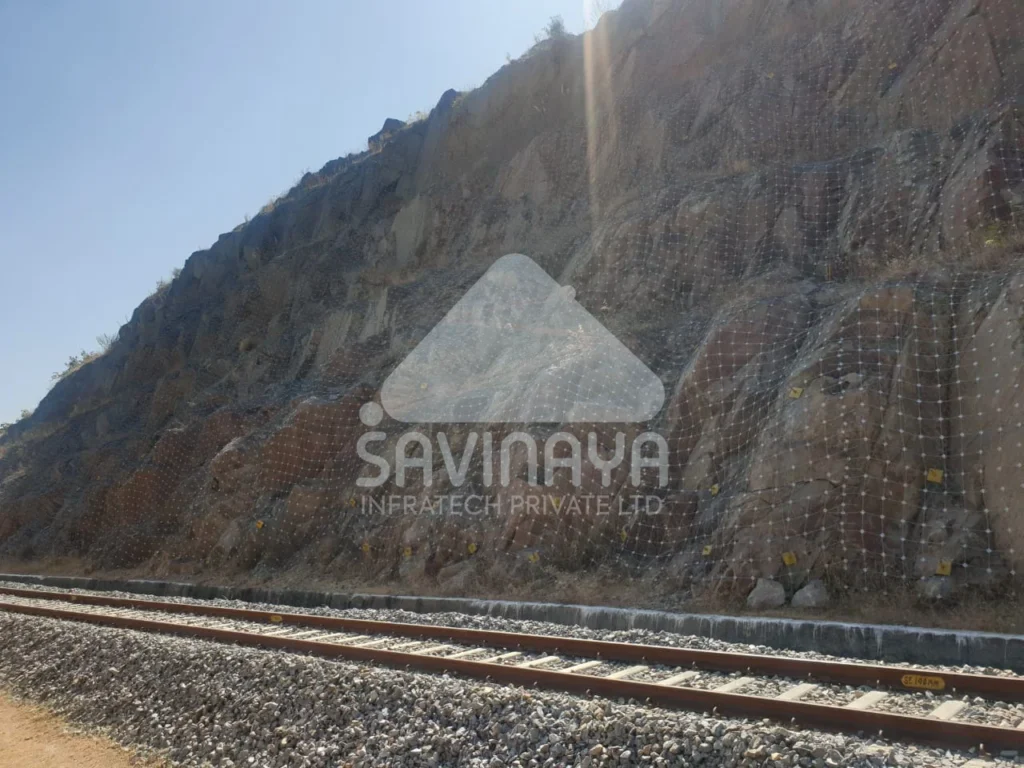
Rockfall rarely happens “out of nowhere.” In most cases, the slope has been giving clues for months or even years. Here are five major signs of unstable slopes that suggest you should consider slope rockfall protection and professional assessment.
1. Loose Rocks on the Slope Surface
One of the most obvious warning signs of rockfall is the presence of loose rocks on the slope surface or at its toe. You may notice:
- Freshly exposed stones resting on ledges
- Rocks that move easily when touched
- Small blocks that have recently rolled down and accumulated at the base
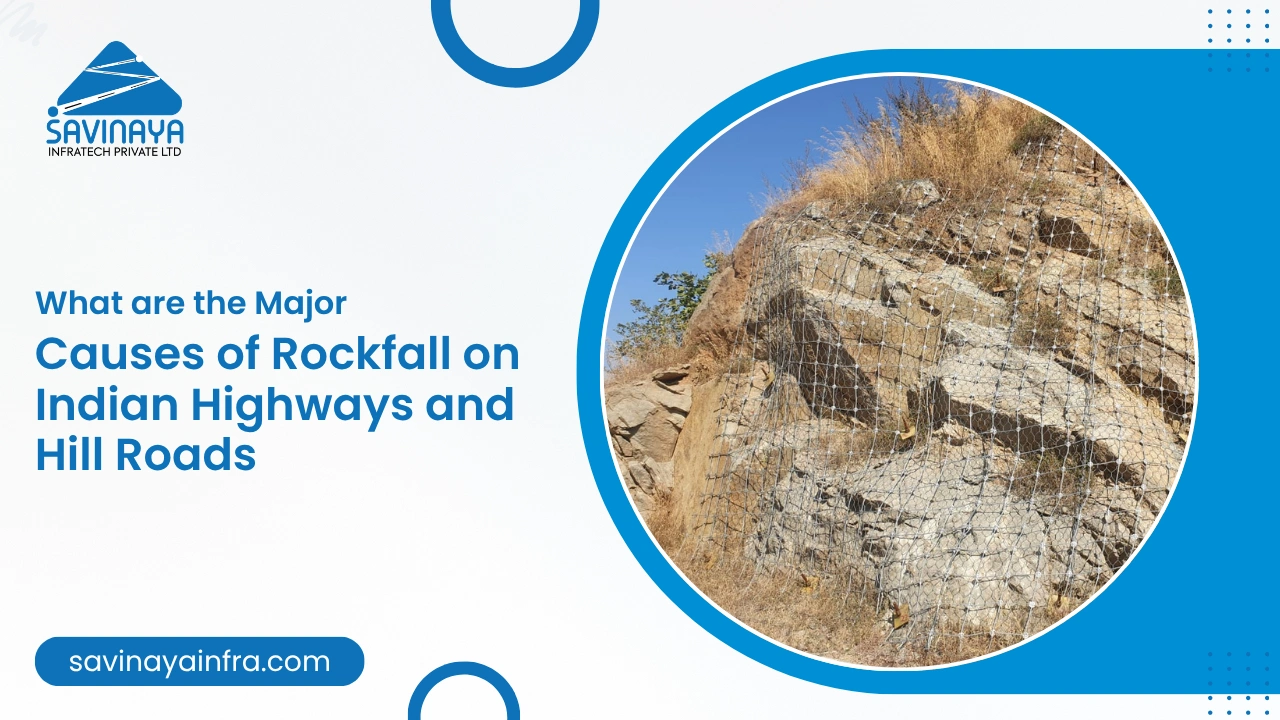
These loose blocks often indicate that sections of the slope have already started to detach due to weathering, vibration, or gravity. When you see this pattern, it’s a strong indicator that the area may require rockfall protection and possibly rockfall netting systems to catch or restrain detached blocks.
Over time, unchecked loose material can evolve from minor nuisance falls into larger events that threaten roads, buildings, walkways, or infrastructure below. Addressing these early with targeted rockfall prevention methods or rockfall protection solutions is far more cost‑effective than repairing damage after a major event.
2. Debris and Accumulation
Another key signal is repeated or increasing debris accumulation at the base of the slope. If you routinely find:
- Small stones, dust, and fragments on roads or pathways
- Piles of rock chips collecting in drains or along retaining walls
- New deposits appearing after each rainy season or after blasting and construction activities
These patterns suggest that the slope is actively shedding material. Even if the pieces are small, they can indicate ongoing deterioration within the rock mass.
In such cases, you may need rockfall barriers or rockfall protection systems to intercept falling debris and safeguard traffic, pedestrians, or assets in the impact zone. Combined with rock slope stabilization measures, these systems help control both frequent minor falls and occasional larger blocks that could otherwise cause serious damage.
3. Water Seepage and Staining
Water is one of the most important drivers of slope instability. Persistent water seepage, damp patches, or staining on the rock face are significant signs of rockfall protection needs. Look for:
- Wet streaks or discoloration following rain
- Rust-colored or whitish mineral deposits indicating long-term seepage paths
- Water flowing out of joints, cracks, or bedding planes
Water infiltrates fractures, reduces the friction between rock blocks, and can lead to freeze–thaw cycles that progressively loosen the rock mass. In some cases, seepage can also wash out fine materials from joint fillings, weakening the natural “glue” holding blocks together.
If you notice these moisture-related features, it may be time to consider a combination of drainage measures and rockfall mitigation solutions. Proper surface and sub-surface drainage, combined with rockfall protection for slopes, helps manage both water and falling blocks, reducing long-term instability.
4. Visible Cracks in the Rock Face
Visible cracks or fractures are among the clearest signs of unstable slopes. These cracks often:
- Run parallel to the slope face
- Outline blocks that look ready to detach
- Widen over time or after extreme weather events
Such features indicate that the rock mass is subdividing into potential failure blocks. When combined with water, vibration (for example, from traffic), or weathering, these blocks can detach and fall without much warning.
In these conditions, you should seriously evaluate rock slope stabilization strategies, such as rock bolting, shotcrete, or anchoring, together with rockfall protection systems like rockfall netting systems and fences. The goal is to both secure the rock mass and control any stones that do manage to break free.
5. Overhangs and Key Block
Overhanging sections and clearly defined “key blocks” are strong warning signs of rockfall risk. Overhangs are portions of rock that protrude outward, often supported by weaker material or intersecting joints. A key block is a specific rock element whose stability depends on the condition of a few critical joints or supports.
Signs to watch for include:
- Rock ledges that project significantly beyond the material below
- Blocks that appear “wedged” in place along intersecting cracks
- Undercutting at the base of the slope due to erosion or human activity
Overhanging and key blocks can fail suddenly, especially under heavy rain, seismic events, or human-induced vibrations. In such high-risk zones, engineered rockfall protection solutions like anchored rockfall barriers, draped nets, and targeted slope stabilization works are often necessary to manage the hazard.
You May Also Read: How Rock Fall Protection Systems Help to Prevent Landslides and Improve Safety
What Happens If Rockfall Risks Are Ignored?
Ignoring the signs of rockfall protection needs can lead to serious consequences. At the most basic level, uncontrolled rockfalls can block roads, damage structures, or disrupt operations. More critically, they can cause injuries or fatalities if people or vehicles are present in the fall zone.
From an economic perspective, unmitigated rockfalls can result in:
- Repeated clean-up costs and traffic disruptions
- Damage to retaining walls, buildings, pipelines, or utilities
- Increased maintenance of drainage and access routes
In many cases, the long-term costs of doing nothing far exceed the investment required for proactive rockfall mitigation and slope rockfall protection. Insurance, regulatory compliance, and stakeholder expectations are also increasingly aligned with early, responsible management of geotechnical risks.
You May Also Read: Why Rockfall Protection Systems Are a Must for Highway & Tunnel Projects
What Are the Common Rockfall Protection Measures?
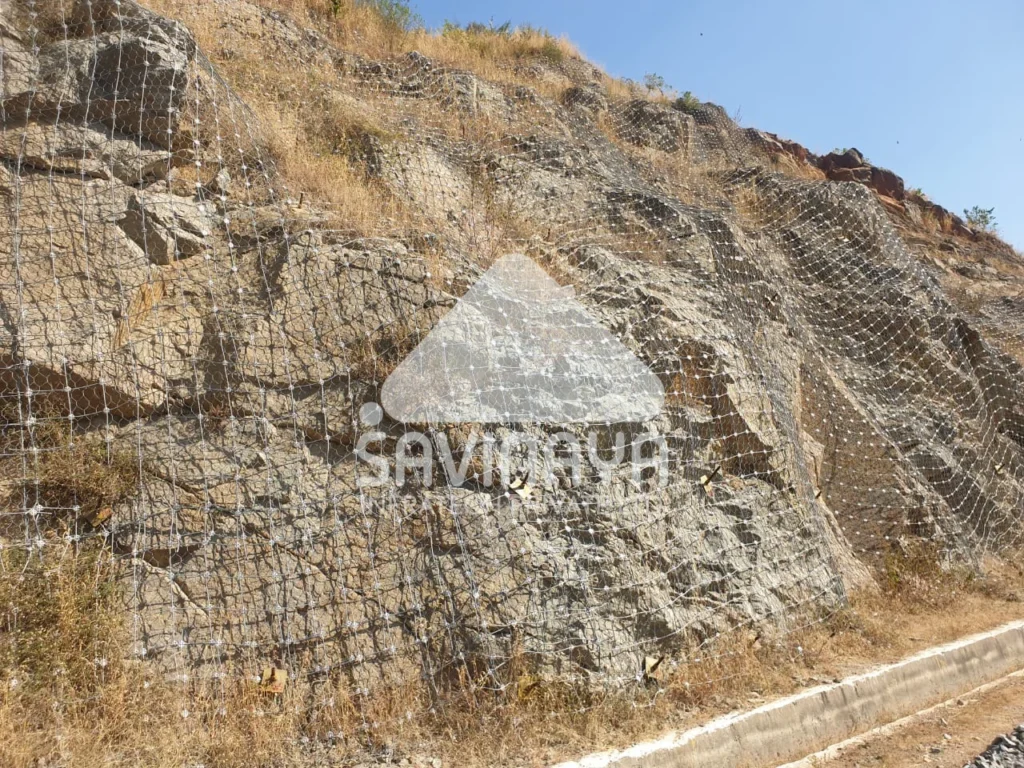
Once you recognize the signs of rockfall protection needs, the next step is to consider which rockfall prevention methods and systems might be appropriate. Common measures include:
1. Rockfall Netting Systems
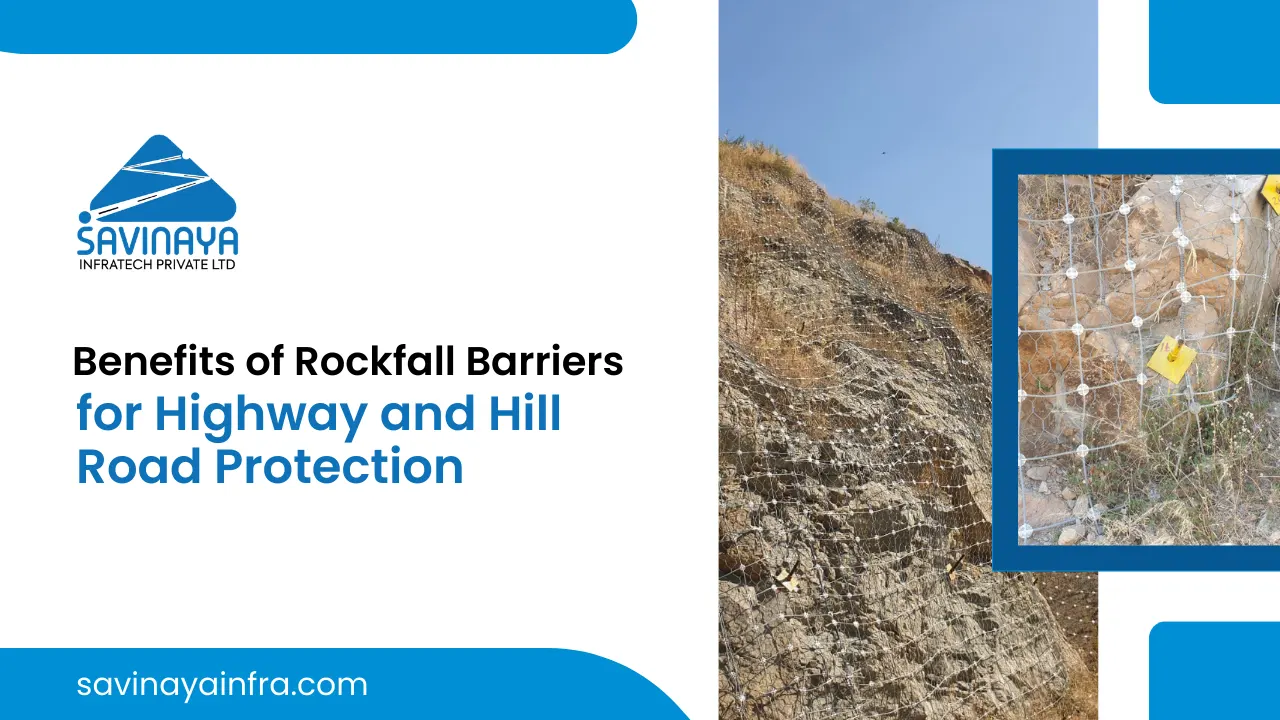
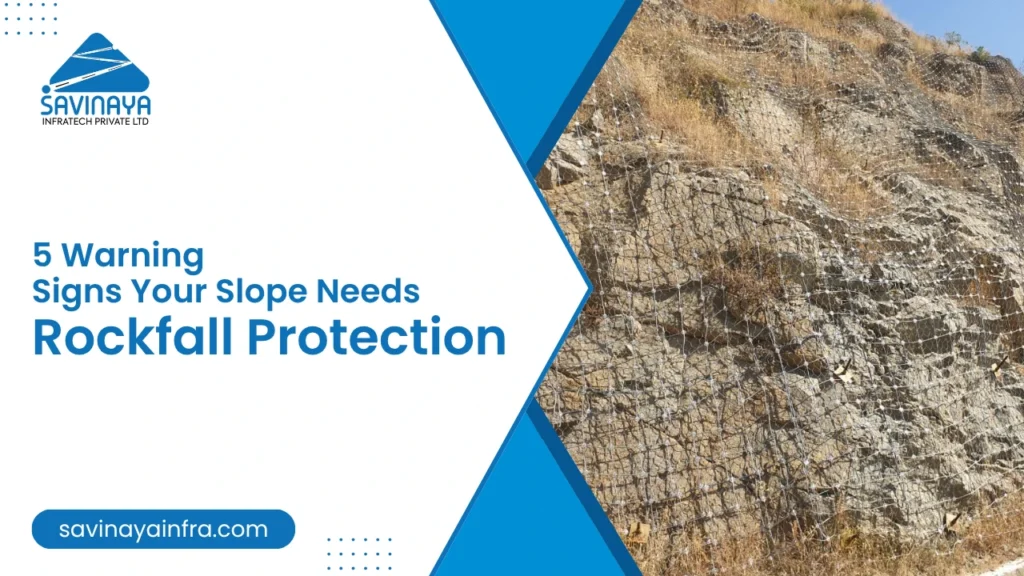
Flexible wire meshes that drape over the slope, holding loose material against the face and preventing small to medium blocks from detaching freely.
2. Rockfall Barriers
Free-standing fences or barriers installed at the toe or mid-slope to intercept falling blocks and absorb their energy.
You May Also Read Our Detailed Blog On: Rock Fall Barriers vs Netting: Which Protection System is Best?
3. Rock Slope Stabilization Techniques
Rock bolts, anchors, shotcrete, and other structural solutions used to secure unstable blocks and reinforce the rock mass.
4. Drainage and Erosion Control
Surface channels, subsurface drains, and erosion-control matting that reduce water infiltration and surface erosion, lowering the likelihood of block detachment. These measures are also among the practical methods to prevent soil erosion on vulnerable slopes, especially where runoff and loose surface material can gradually weaken the slope.
Surface channels, subsurface drains, and erosion-control matting help reduce water infiltration and surface erosion, lowering the likelihood of block detachment.
5. Scaling And Trimming
Controlled removal of loose or marginally stable material under safe conditions, reducing the inventory of potential rockfall blocks.
Typically, the best approach combines multiple rockfall protection solutions, tailored to the specific geology, slope geometry, and risk profile of the site. The selection should be guided by experienced engineers who understand both rockfall mitigation techniques and practical site constraints.
You May Also Read: Rockfall Mesh Vs Barriers Vs Fences: Which Protection System is Best for Your Site?
How Savinaya Infratech Helps Stabilize High-Risk Slopes?
At Savinaya Infratech, we design site-specific rockfall protection solutions that combine rockfall netting, rockfall barriers, and custom systems to improve slope stability and protect critical infrastructure.
- Tailored designs aligned with your slope’s geology, rock size, and fall zones.
- Precision engineering and high-quality materials for reliable, long-term performance.
- Expert installation to ensure each rockfall protection system works as intended on-site.
- Honest, appropriate solutions that avoid overengineering while keeping safety first.
Conclusion
Rockfalls are not random events; they are the result of gradual changes in rock mass conditions that often reveal themselves through clear warning signs. Loose rocks, recurring debris, water seepage, visible cracks, and overhanging or key blocks are all strong signs of unstable slopes and indicators that you may need slope rockfall protection. If you want to make your high-risk slope safer, please reach out to our team for expert rockfall protection systems for your project.