Slopes may look calm and stable on the surface, but underneath, they’re often dealing with natural pressure, water flow, loose soil, or vibrations that can cause them to give way. In hilly areas or along highways, one heavy rain or a small shift in the ground is sometimes all it takes to trigger a landslide.
That’s where slope stabilization becomes more than just an engineering option it becomes a safety priority. Among the many slope protection techniques available today, soil nailing has emerged as one of the most effective solutions for keeping slopes intact and preventing disasters.
In this blog, we’ll explore the root causes of slope failures and landslides, and explain how soil nail installation works to strengthen slopes from within. If you’re a developer or landowner facing slope instability, you’ll see why working with a skilled soil nailing contractor can make all the difference.
Key Takeaways
- Slope failures are caused by rainfall, loose soils, poor drainage, seismic activity, and human excavation.
- Soil nailing stabilizes slopes by inserting steel bars (nails) into the ground, which reinforce and anchor loose soil layers.
- This technique transforms unstable soil into a reinforced composite mass that resists sliding and deformation.
- Built-in drainage systems prevent water buildup a common trigger for landslides.
- Ideal for hilly terrains, road cut slopes, urban excavations, and landslide-prone areas.
- Soil nailing offers cost-effective, quick, and non-intrusive slope stabilization with minimal site disturbance.
Table of Contents
Common Causes of Slope Failures & Landslides
Before we understand how soil nailing helps, it’s important to look at why slopes fail in the first place. Landslides and slope failures are rarely random they usually happen because of one or more of the following:
- Heavy rainfall: Water seeps into the soil, increases pore pressure, and weakens the bond between soil particles.
- Loose or weak soil: Sandy, clayey, or weathered soil layers often struggle to support themselves on a slope.
- Earthquakes or vibrations: Sudden movements shake up the soil, reducing stability.
- Deforestation or excavation: Removing vegetation or cutting into a slope changes the natural balance.
- Poor drainage: Water accumulation behind slopes adds extra weight and pressure, pushing the soil outward.
- Overloading: Buildings or roads placed too close to the edge of a slope can tip the balance.
In all these scenarios, the soil starts to move under its own weight or due to added pressure, leading to landslides. That’s why landslide prevention strategies must address both the surface and what’s happening beneath.
You May Also Read: How Rock Fall Protection Systems Help to Prevent Landslides and Improve Safety
How Soil Nailing Mechanism Stabilizes Slopes & Prevents Landslides?
Soil nailing is a ground reinforcement method where steel bars (called soil nails) are drilled into the slope at regular intervals. These nails act like anchors, holding the soil in place and stopping it from moving.
Here’s how soil nailing mechanism works in simple terms:
1. Soil Nail Installation Process
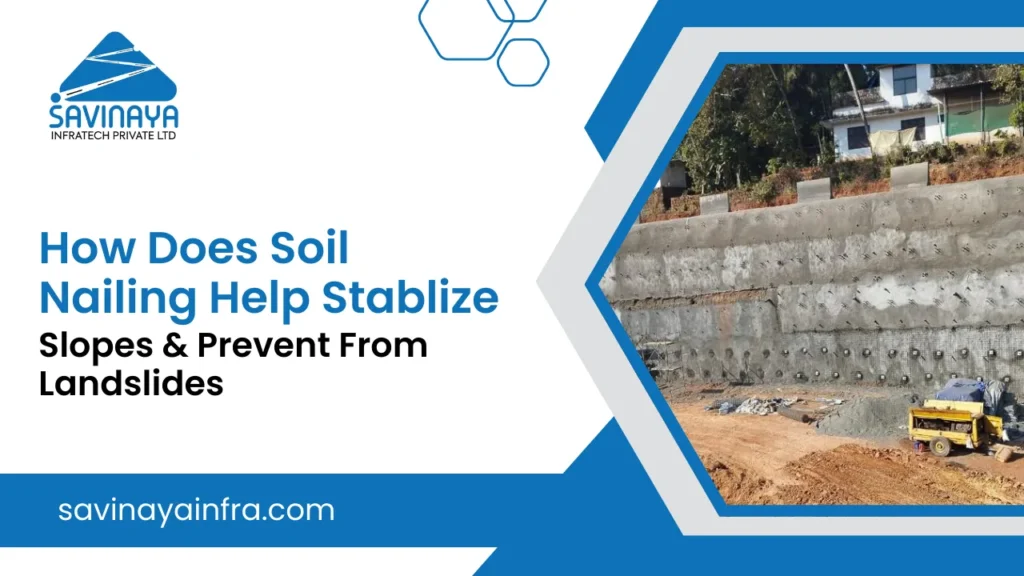
The first step involves drilling small-diameter holes into the slope or excavation face. Soil nails (usually steel bars) are then inserted into these holes and grouted in place. Sometimes, a drainage system is added to relieve water pressure. A facing layer such as shotcrete is applied to hold everything together at the surface.
This soil nail installation process strengthens the existing ground without the need to build large retaining structures. That’s why soil nail wall construction is ideal for tight spaces, steep terrains, or areas with limited access.
2. Internal Reinforcement of Slopes
Once the nails are in place, they work with the surrounding soil to create a composite mass that behaves like a solid block. This internal bracing improves the slope’s resistance to sliding and makes it much more stable—even during rains or small earthquakes.
3. Drainage and Pressure Relief
Many soil nail systems are designed with built-in drainage to prevent water buildup behind the slope. Controlling water is one of the most important parts of landslide prevention. Without it, even the best reinforcement may not hold.
4. Flexibility with Terrain
One of the biggest benefits of soil nailing is that it adapts to the shape and nature of the existing slope. You don’t need to reshape the land too much, which helps preserve natural contours and reduces environmental disturbance.
5. Minimal Construction Disruption
One of the reasons soil nailing is preferred for slope stabilization is that it allows construction work to continue with minimal interruption. This method strengthens the existing ground without large-scale excavation. It avoids the need for heavy retaining structures. That’s why it works well near roads, buildings, or active construction sites where downtime is not an option.
Final Thoughts
When it comes to slope stabilization, there are many options—but few offer the balance of performance, flexibility, and cost-efficiency that soil nailing does. It allows engineers to strengthen slopes from the inside out, using the ground itself as part of the solution. That’s why it’s become a go-to method for landslide prevention, especially in hilly and high-risk areas.
From hillside highways to deep excavations in cities, soil nailing continues to prove its value. With proper design and expert execution, it can extend the life of infrastructure and protect both people and property from potential disasters.
Ready to Stabilize Your Site with Soil Nailing?
At Savinaya Infratech, we specialize in soil nail installation and complete slope protection techniques tailored to Indian terrain. Whether you’re facing an unstable cut slope, planning an excavation, or responding to a recent landslide, our team of experienced engineers and technicians is here to help.
We offer:
- Site-specific slope assessments
- Expert-designed soil nail wall construction
- Fast, safe, and efficient execution
- Reliable, long-term slope support
Reach out today to speak with a qualified soil nailing contractor and get the right quote for your project.