Highways and hill roads that pass through mountainous terrain often face the risk of falling rocks and debris. Changes in weather, natural erosion, and slope instability can cause rocks to detach from slopes and roll onto roads. These incidents can disrupt traffic, damage vehicles, and pose serious safety risks.
To address this challenge, engineers use rockfall barriers as part of modern slope safety solutions. These systems intercept falling rocks before they reach roads, railways, or infrastructure located below unstable slopes.
Today, many highway authorities rely on rockfall protection systems to improve road safety in mountainous areas. Properly installed rockfall safety barriers reduce the impact of falling rocks and help maintain safe transportation routes.
Key Takeaways
- Rockfall barriers stop falling rocks before they reach highways.
- They improve safety for vehicles and road users.
- They help reduce road damage and repair costs.
- Rockfall barriers support safe travel on hill roads.
- Flexible, rigid, and drapery systems are common barrier types.
- Proper design depends on slope conditions and rockfall energy.
- These systems help keep roads open and reduce disruptions.
- Rockfall barriers improve long-term highway safety in mountain regions.
Table of Contents
What Are Rockfall Barriers and How Do They Work?
Many people ask what is rockfall barriers and how they protect roads in mountainous terrain. Rockfall barriers are engineered protective structures designed to stop or slow down falling rocks before they reach highways or infrastructure.
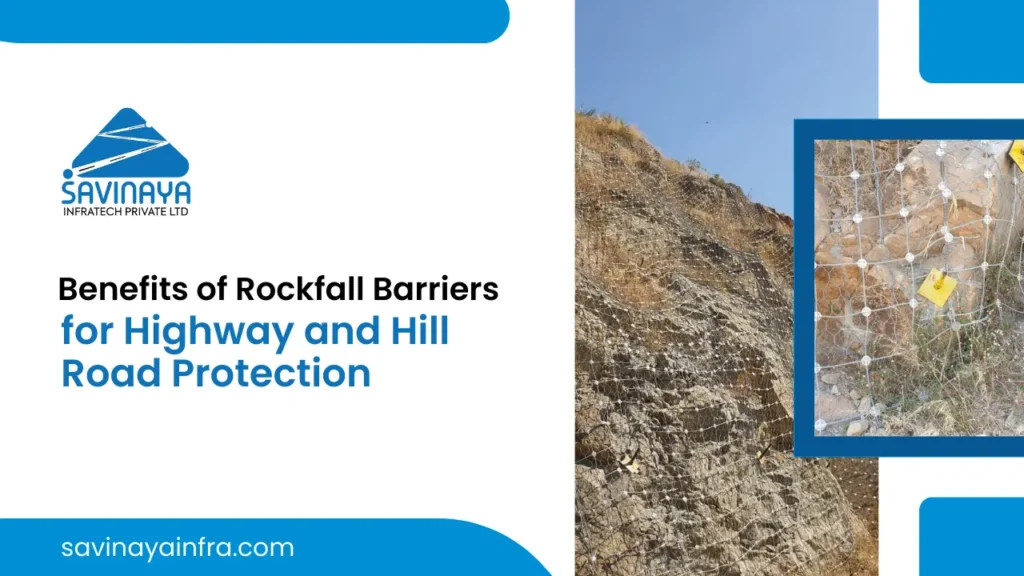
These barriers are typically made of high-strength steel wire mesh, support posts, and energy-absorbing components. When rocks fall from slopes, the barrier absorbs and dissipates the impact energy while preventing the rocks from reaching the roadway.
Modern rockfall protection systems are designed to handle varying levels of rockfall energy. These systems form an important part of slope rockfall protection strategies in mountainous regions. In highway projects, a properly designed rockfall barrier for highways can significantly reduce risks associated with falling debris.
Economic & Environmental Benefits of Rockfall Barriers for Highway & Hill Roads Protection
Installing rockfall barriers provides several economic & environmental advantages for infrastructure projects, particularly in mountainous regions where falling rocks can cause damage and disruption.
Economic Benefits
1. Improved Road Safety
One of the major benefits of rockfall barriers is improved safety for vehicles and road users. Rockfall safety barriers intercept falling rocks before they reach highways, helping reduce accidents and protecting transportation routes.
2. Reduced Infrastructure Damage
Falling rocks can damage road surfaces, bridges, vehicles, and roadside infrastructure. By installing rockfall protection systems, highway authorities can minimize repair costs and avoid frequent road closures.
3. Cost Efficiency
Compared with large retaining structures or extensive slope modification works, rockfall protection solutions can provide reliable safety with relatively lower construction and maintenance costs. This makes rockfall barrier for highways a practical option for long highway corridors in mountainous terrain.
Environmental Benefits
Along with economic advantages, rockfall barriers also offer environmental benefits that make them suitable for projects located in natural landscapes and hill regions.
1. Minimal Slope Disturbance
Many rockfall protection systems can be installed with limited excavation and minimal changes to the natural slope. This helps preserve the natural terrain and reduces environmental disturbance.
2. Support for Natural Drainage and Vegetation
Unlike large concrete structures, slope rockfall protection barriers allow natural drainage and vegetation growth around the installation area, helping maintain the surrounding ecosystem.
3. Reduced Environmental Impact
Because rockfall safety barriers require less material and earthwork compared to large structural solutions, they help reduce the environmental footprint of highway safety projects.
You May Also Read: Rock Fall Barriers vs Netting: Which Protection System is Best?
Types of Rockfall Barriers Used in Highway & Hill Road Projects
There are several rockfall barriers types used in slope stabilization and infrastructure safety projects.
1. Flexible Rockfall Barriers
Flexible barriers use steel wire mesh supported by posts and cables. These systems absorb impact energy and are widely used in rockfall protection for hill roads.
2. Rigid Barriers
Rigid barriers are made from concrete or steel structures designed to deflect falling rocks away from roads.
3. Drapery Systems
Drapery systems consist of wire mesh placed directly over slopes to guide rocks safely to the base without reaching the road. Each of these rockfall barriers types plays a role in different rockfall protection scenarios depending on slope conditions and rockfall energy levels.
How Rockfall Barriers Improve Highway & Hill Roads Resilience?
Infrastructure resilience refers to the ability of roads and structures to withstand natural hazards and maintain functionality.
Rockfall barriers help improve resilience in mountainous transport networks by preventing slope hazards from affecting road operations. In areas with frequent rockfall activity, highway rockfall protection systems reduce traffic disruptions and improve long-term road reliability.
For hill roads, rockfall protection plays a major role in protecting vehicles, road structures, and nearby infrastructure. By combining slope stabilization methods with rockfall safety barriers, engineers create safer and more reliable transportation routes.
You May Also Read: How Rock Fall Protection Systems Help to Prevent Landslides and Improve Safety
Factors to Consider When Choosing Rockfall Barriers
Selecting the right rockfall barriers requires careful engineering evaluation.
- Rockfall Energy Levels: The size and velocity of falling rocks determine the design of rockfall safety barriers.
- Slope Conditions: Slope angle, soil type, and geological conditions influence the design of slope rockfall protection systems.
- Road Location and Traffic: Highways with heavy traffic may require a stronger rockfall barrier for highway systems to improve safety.
- Maintenance Requirements: Some rockfall protection systems require periodic inspection and maintenance to maintain performance. Proper planning ensures that the selected rockfall protection system performs effectively over the long term.
You May Also Read: How to Choose the Right Rock Fall Protection System
Choose Savinaya Infratech for Rockfall Barriers Solutions
Savinaya Infratech provides geotechnical engineering solutions including rockfall protection systems, slope stabilization, retaining structures, and ground improvement works.
The company works on infrastructure projects that require slope rockfall protection and highway safety solutions in challenging terrain. With experience in slope stabilization and geotechnical construction, the team implements rockfall protection measures designed to improve road safety.
Savinaya Infratech supports infrastructure developers and highway authorities with solutions such as rockfall barriers, rockfall safety barriers, and other rockfall protection systems used in highway and hill road projects. Contact us to discuss your project needs.
Conclusion
Mountain highways and hill roads often face the risk of falling rocks due to natural slope conditions. Installing rockfall barriers is one of the most effective ways to reduce these risks and improve road safety.
Modern rockfall protection systems provide strong protection against falling debris while helping maintain traffic flow and reduce infrastructure damage. With proper design and installation, rockfall safety barriers offer long-term protection for transportation routes in mountainous regions.
As infrastructure development continues to expand into challenging terrain, the benefits of rockfall barriers will remain important for improving safety and resilience in highway and hill road networks.