Slope instability can create serious risks in infrastructure projects such as highways, mining areas, rail corridors, and hill roads. Soil movement, erosion, and landslides can damage structures and disrupt transportation networks. Engineers use several ground stabilization methods to address these challenges, and soil nailing has become one of the most widely used solutions.
The soil nailing technique strengthens slopes by inserting steel bars into the ground and bonding them with grout. These reinforcements improve the stability of the soil mass and reduce the risk of failure. Because of its adaptability and efficiency, soil nailing systems are commonly used in excavation support, road widening projects, and slope stabilization works.
A common question from engineers and project owners relates to the lifespan of soil nailing. Understanding how long the system lasts helps with planning, maintenance, and long-term infrastructure safety.
Key Takeaways
- Soil nailing strengthens slopes by reinforcing the ground with steel bars and grout.
- Properly designed soil nailing systems can last about 50–100 years.
- Temporary soil nailing systems usually last 18 months to 5 years.
- Permanent soil nail walls include stronger corrosion protection and detailed design.
- Ground conditions, material quality, and installation accuracy affect lifespan.
- Good drainage helps protect soil nail walls from water pressure and damage.
- Regular inspections help detect slope movement, cracks, or corrosion early.
- Professional design and installation improve long-term slope stability.
Table of Contents
What Is the Typical Lifespan of Soil Nailing?
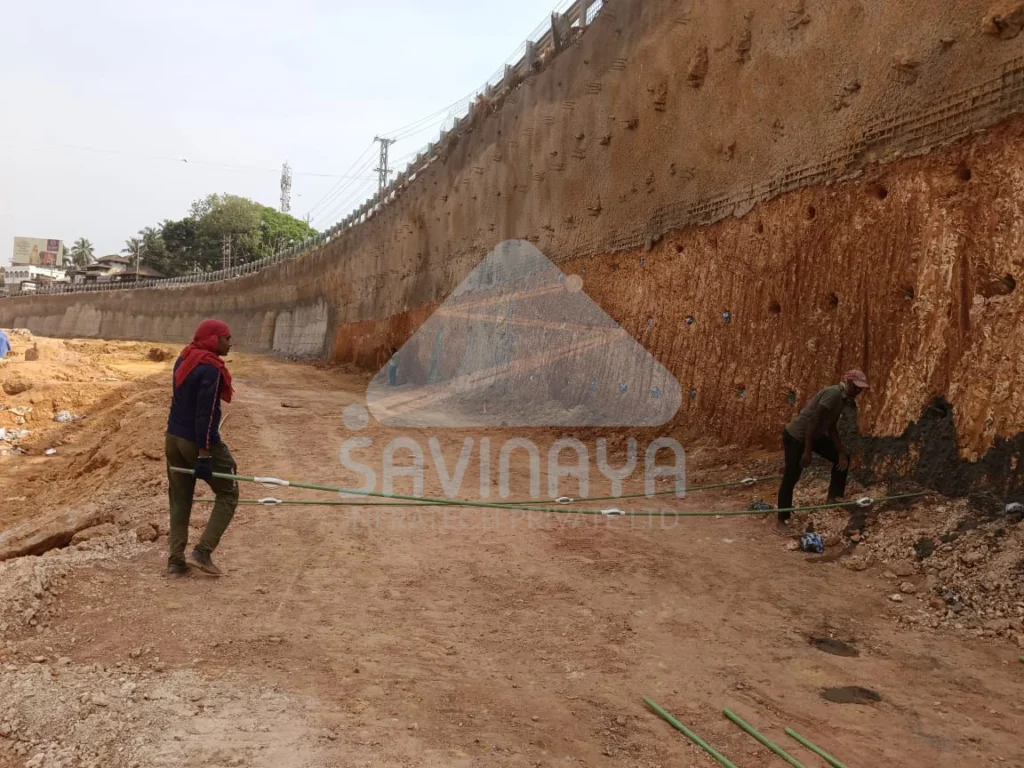
The soil nailing life expectancy depends on design specifications, environmental conditions, and construction quality. In most permanent stabilization projects, properly designed soil nailing systems can last 50 to 100 years.
The durability of soil nails for slope stability comes from corrosion protection, proper grouting, and quality installation methods. The grout surrounding the steel bars protects them from moisture and environmental exposure.
When the soil nailing procedure follows engineering standards and the materials meet project specifications, the system becomes part of the reinforced ground structure and provides long-term slope support.
Temporary vs Permanent Soil Nailing: How Longevity Differs
1. Temporary Installations
Temporary soil nailing is often used during excavation support for basements, retaining structures, or construction activities. These soil nailing systems typically last 18 months to 5 years, depending on project duration. Temporary systems usually have basic corrosion protection since they are intended for short-term stability.
2. Permanent Installations
Permanent soil nail wall construction is designed for long-term slope stabilization. These systems include advanced corrosion protection, thicker grout cover, and detailed engineering design. Permanent soil nailing for slope stability is built to remain functional for several decades. The design approach directly influences the soil nailing life expectancy.
Factors Influencing Soil Nail Longevity
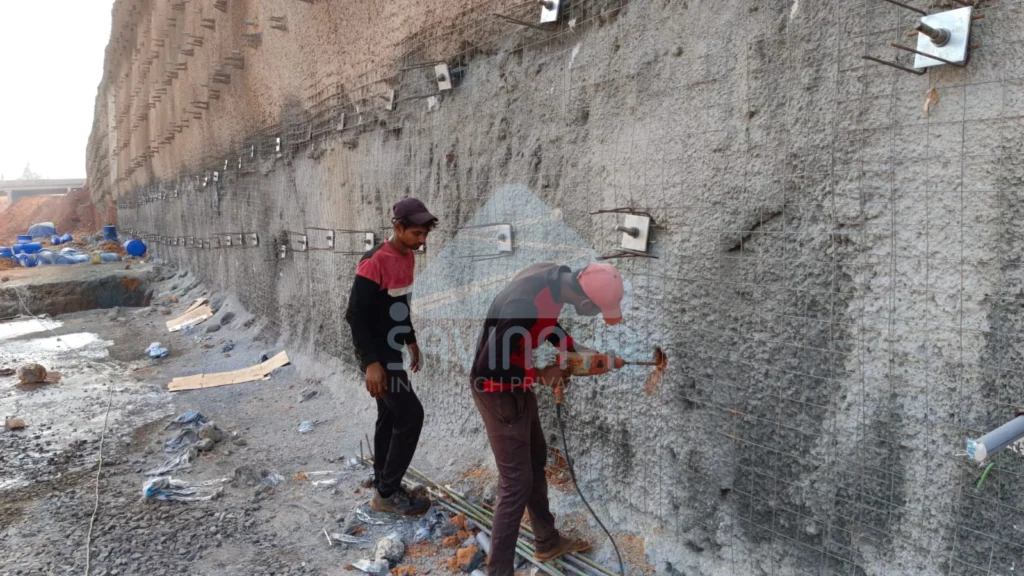
Several technical factors affect the lifespan of soil nailing in slope stabilization projects.
- Ground Conditions: Soil type, groundwater levels, and slope geometry influence how the reinforcement interacts with the soil mass.
- Material Quality: High-quality steel bars and grout improve durability in soil nail walls.
- Corrosion Protection: Protective coatings, encapsulation, and grout coverage reduce corrosion risks and improve the soil nailing life expectancy.
- Installation Accuracy: Correct drilling, bar placement, and grouting during the soil nailing procedure are critical for long-term performance.
- Drainage Conditions: Proper slope drainage prevents water buildup and reduces pressure on soil nail wall construction systems.
You May Also Read: How Soil Nailing Restores Failing Reinforced Earth Walls
Signs That Soil Nailing May Be Nearing the End of Its Service Life
Although soil nailing systems are designed for long-term use, periodic inspection helps identify potential problems.
Common warning signs include:
- Visible slope movement or ground cracking
- Damage or displacement in the facing of the soil nail wall construction
- Increased water seepage or poor drainage conditions
- Corrosion in exposed reinforcement components
Early detection allows engineers to repair or reinforce the system before major structural issues develop.
You May Also Read: Why Soil Nailing Is the Best Method for Highway Slope Stability
How to Extend the Lifespan of Soil Nailing?
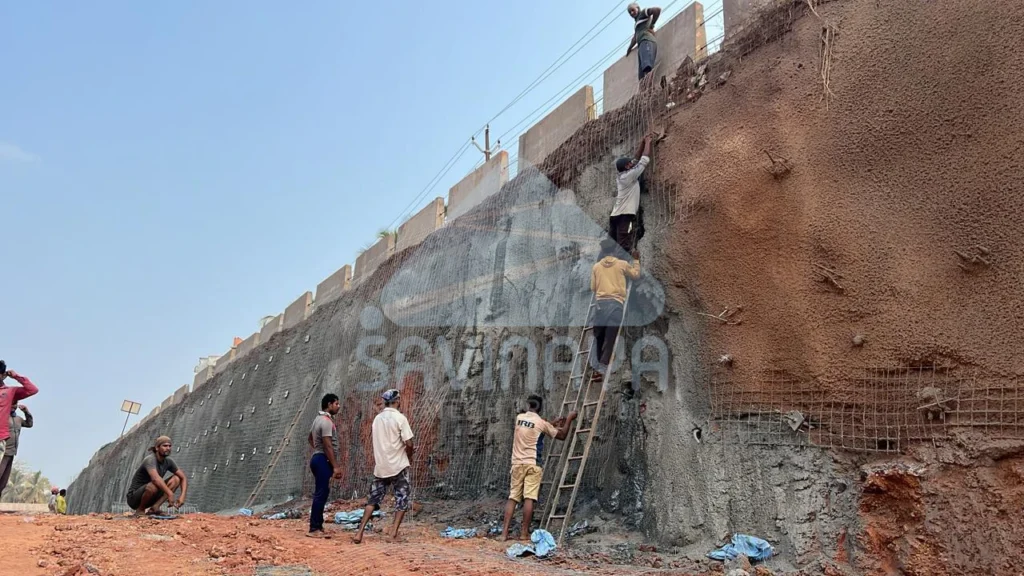
Proper planning and maintenance can significantly improve the soil nailing wall’s life expectancy.
- Quality Design: Detailed engineering design ensures that soil nails for slope stability can handle long-term loads.
- Advanced Corrosion Protection: Encapsulation and protective coatings help protect steel reinforcement from environmental exposure.
- Proper Drainage Systems: Drainage layers and weep holes reduce water pressure behind the reinforced soil mass.
- Professional Installation: Experienced teams performing the soil nailing procedure improve reliability and long-term performance.
- Regular Monitoring: Routine inspections allow early detection of problems in soil nailing wall systems.
How Savinaya Infratech Delivers Reliable Soil Nailing Services for Long-Term Slope Stability?
Savinaya Infratech provides specialized soil nailing services for infrastructure and slope stabilization projects across India. The company works on geotechnical solutions, including slope stabilization, retaining structures, rockfall protection, and ground improvement.
As a dedicated soil nailing contractor, Savinaya Infratech has completed major infrastructure projects and achieved notable milestones. The team has constructed the deepest vertical soil nailed wall in India for NHAI and executed large slope stabilization works, including mining slope stabilization projects in Odisha and long nailed wall installations for national highways.
The company’s soil nail wall construction approach focuses on:
- Detailed site assessment and slope evaluation
- Engineering-based soil nailing technique and layout planning
- Controlled drilling, grouting, and reinforcement installation
- Implementation of soil nailing systems for highway, mining, and infrastructure slopes
With experience in national highway and large infrastructure projects, Savinaya Infratech operates as an experienced soil nailing contractor delivering stabilization solutions for challenging terrain and high-risk slopes. If you have a project to discuss, get in touch with us.
Conclusion
The durability of soil nailing makes it one of the most reliable methods for slope stabilization in modern infrastructure projects. With proper design, materials, and installation, the lifespan of soil nailing wall can extend for several decades.
From highway embankments to mining slopes and excavation support, soil nailing systems provide strong and adaptable reinforcement for unstable ground. When installed by an experienced soil nailing company, these systems can deliver long-term stability and improved safety for infrastructure projects.
Frequently Asked Questions
1. Is soil nailing a permanent slope stabilization solution?
Yes, soil nailing can be designed as a permanent slope stabilization solution. Permanent soil nailing systems are built with corrosion protection, proper grouting, and engineering design that allows the reinforcement to perform for several decades. When installed through a proper soil nailing procedure, the system can provide long-term stability for slopes along highways, railways, and infrastructure projects.
2. Is soil nailing suitable for high rainfall areas?
Yes, soil nailing systems can perform well in high rainfall regions when proper drainage measures are included in the design. Drainage layers, weep holes, and surface protection help prevent water buildup behind the slope. With the right soil nailing technique, slopes exposed to heavy rainfall can remain stable and resistant to erosion.
3. Is soil nailing suitable for all types of slopes?
Soil nailing works well for many soil and weathered rock slopes, particularly in infrastructure and excavation projects. However, the method may not be suitable for extremely loose soils or very soft ground without additional stabilization measures. Engineers typically conduct site investigations before recommending soil nailing systems or other stabilization solutions.
4. Can soil nails corrode over time?
Yes, soil nails can corrode over time if not properly protected. Modern soil nailing systems use protective coatings, encapsulation, and cement grout to reduce exposure to moisture and air. These measures help extend the soil nailing wall life expectancy in long-term projects.
5. What reduces the lifespan of soil nails?
Several factors can reduce the lifespan of soil nailing, including poor drainage, corrosion, improper installation, and inadequate design. If the soil nailing procedure is not performed correctly or if protective measures are missing, the reinforcement may deteriorate faster. Regular inspection and proper engineering design help maintain the durability of soil nail wall construction systems.