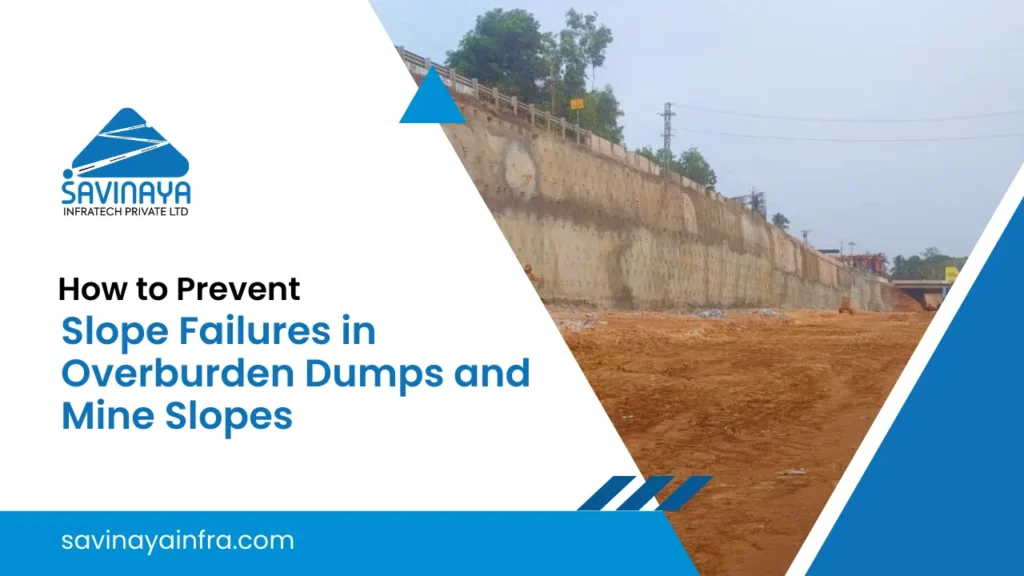
Slope failures in mining environments rarely occur without warning. What often appears as a sudden slope collapse is usually the result of gradual slope movement, internal weakening, and overlooked warning signs. In overburden dumps and mine slopes, where large volumes of loose and heterogeneous material are constantly exposed to weather and operational stress, the risk of slope failure is significantly higher compared to natural slopes.
Maintaining slope stability in mining requires more than basic design. It involves continuous assessment, proper drainage, controlled excavation, and the use of effective reinforcement methods such as soil nailing . When these factors are not addressed systematically, the chances of ground failure increase, leading to safety risks, operational delays, and higher remediation costs. Understanding the causes, prevention methods, and early warning signs is key to managing slope performance effectively.
Key Takeaways
- Slope failures in mining are usually gradual, caused by internal weakening, water pressure, and operational stress not sudden events.
- Major causes include weak material composition, poor drainage, over-steep slopes, continuous excavation, and lack of reinforcement.
- Effective prevention requires proper slope design, drainage management, controlled material placement, and stabilization methods like soil nailing.
- Regular monitoring and early detection of warning signs such as cracks or movement are critical to avoid major failures.
- Common mistakes like ignoring drainage, overloading slopes, and skipping reinforcement significantly increase failure risks.
- A proactive approach combining assessment, monitoring, and expert execution ensures long-term slope stability and safety in mining operations.
Table of Contents
What Causes Slope Failures in Overburden Dumps and Mines?
Slope failures in mining are typically driven by a combination of geological, environmental, and operational factors. Identifying these slope failure causes helps in implementing targeted preventive measures.
Key causes include:
1. Weak or Loose Material Composition
Overburden dumps often consist of loosely placed soil and rock fragments. Without proper compaction, this material lacks shear strength, making it prone to slope instability.
2 Water Infiltration and Poor Drainage
Rainfall and seepage increase pore water pressure within the slope. This reduces internal friction and can trigger slope slip or gradual deformation.
3. Over-steep Slope Geometry
Slopes constructed at angles steeper than recommended limits are inherently unstable and more susceptible to slope collapse.
4. Continuous Excavation and Loading
Mining operations disturb the natural equilibrium of slopes. Repeated loading and unloading cycles contribute to progressive slope movement.
5. Lack of Reinforcement Systems.
Slopes without stabilization measures such as soil nailing are more vulnerable to external and internal forces, increasing the risk of ground failure.
You May Also Read: Best Soil Nailing Techniques for Enhancing Soil Stability in Construction
Best Soil Failure Prevention Strategies in Overburden Dumps and Mines
Preventing slope failure requires a proactive and engineering-driven approach that combines design, monitoring, and reinforcement. Below are the 6 best & effective slope failure prevention strategies
1. Optimized Slope Design
Designing slopes with appropriate angles and benching improves slope stability in mining by reducing stress concentration.
2. Efficient Drainage Management
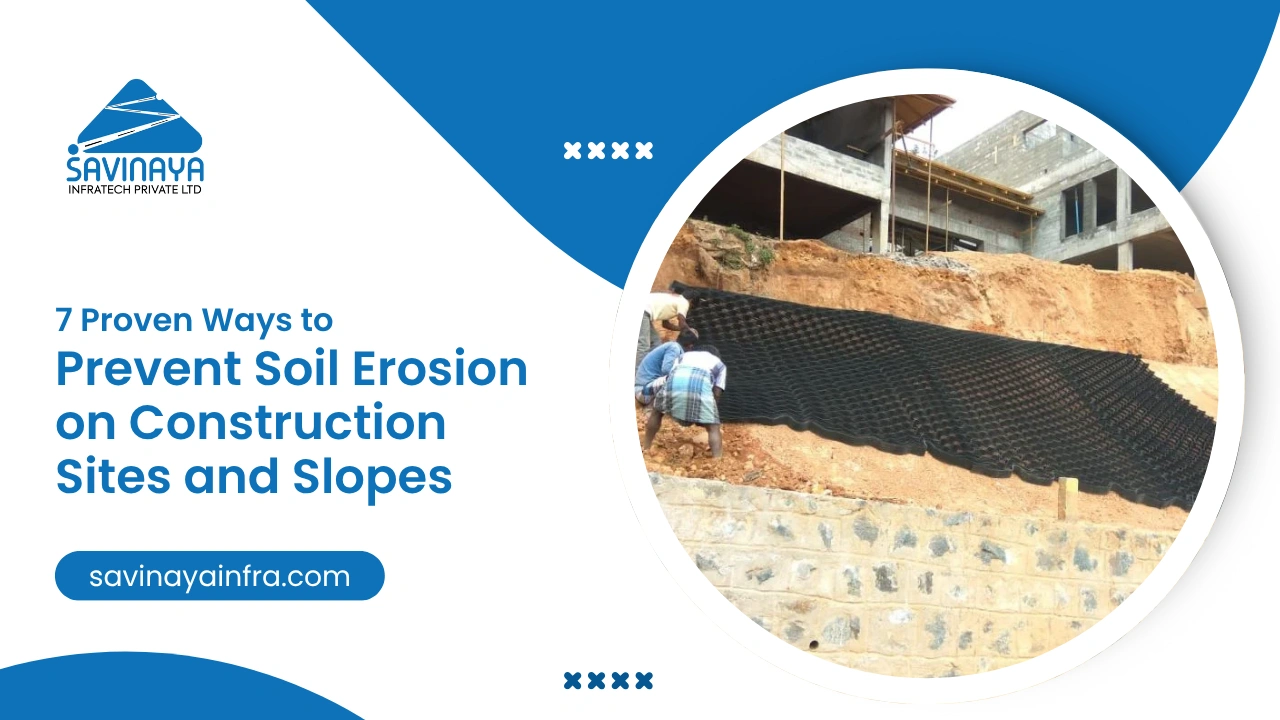
Surface and subsurface drainage systems help control water infiltration and prevent pressure buildup within the slope. Proper drainage is also one of the most practical ways to prevent soil erosion, as it reduces uncontrolled runoff and limits the gradual loss of loose material from mine slopes and overburden dumps.
3. Use of Slope Stabilization Techniques
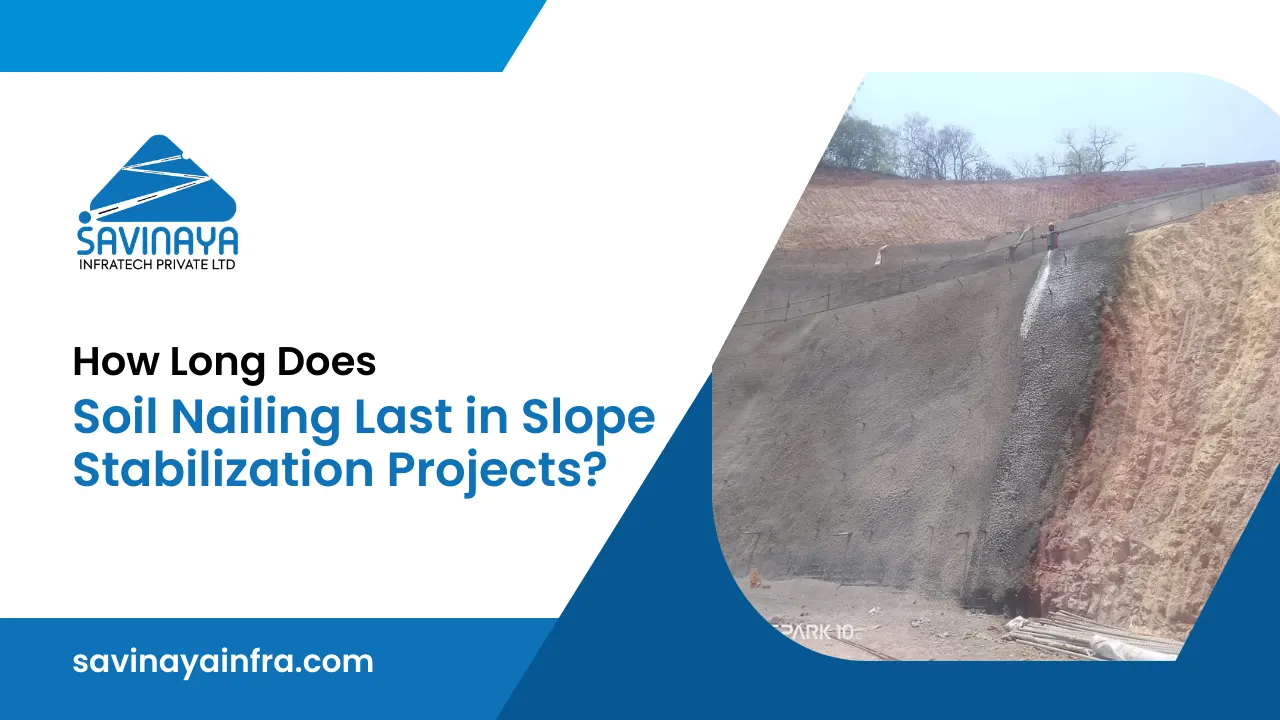
Methods like soil nailing provide internal reinforcement, increasing the shear strength of the slope and limiting slope movement.
4. Controlled Material Placement
Proper compaction and layering of overburden materials improve overall slope performance.
5. Regular Monitoring Systems
Monitoring tools and periodic inspections help detect early signs of slope instability before they escalate.
6. Engaging Experienced Specialists
Working with a professional soil nailing contractor ensures that stabilization measures are designed and executed correctly.
You May Also Read: Top Tips to Choosing the Right Soil Nailing Contractor
Common Mistakes That Lead to Slope Failures
In many cases, slope failures mistakes are not due to complex issues but rather basic oversights during planning and execution.
Common mistakes include:
- Ignoring early warning signs
Small cracks, minor slope movement, or localized deformation are often overlooked until they develop into major issues.
- Inadequate drainage systems
Poor water management remains one of the leading slope failure causes in mining environments.
- Overloading the slope
Dumping excess material without assessing load capacity can trigger slope collapse.
- Improper slope geometry
Steeper slopes without engineering validation increase the risk of slope instability.
- Lack of stabilization measures
Not implementing slope stabilization techniques such as soil nailing leaves slopes exposed to failure.
Avoiding these mistakes can significantly reduce the likelihood of ground failure and improve overall slope safety.
You May Also read: Why Soil Nailing Is the Preferred Slope Stabilisation Method for Highway and Tunnel Projects
How to Assess Slope Stability Before Failure Occurs?
Early assessment plays a critical role in preventing slope failure. Identifying instability at an early stage allows for timely intervention.
Common assessment methods:
- Visual inspections
Detecting cracks, bulging, or unusual slope movement on the surface.
- Geotechnical investigations
Evaluating soil properties, shear strength, and load-bearing capacity.
You may also read: How Does Geotech Engineering Ensure Structural Safety from the Ground Up?
- Instrumentation and monitoring
Using inclinometers and sensors to track displacement and detect slope slip.
- Hydrological analysis
Assessing water flow, seepage patterns, and drainage efficiency.
- Stability analysis models
Engineering calculations to determine the factor of safety and identify potential failure zones.
These methods help in planning effective slope failure prevention strategies before visible damage occurs.
Choose Savinaya Infratech for Slope Stability Through Soil Nailing
Savinaya Infratech offers specialized soil nailing services designed to improve slope stability in mining and overburden dump conditions. With hands-on experience in handling complex slope challenges, the company delivers practical and reliable solutions tailored to site-specific requirements.
Key strengths:
- Expertise in soil nailing for slope reinforcement
- Comprehensive soil nailing services from assessment to execution
- Focus on controlling slope movement and preventing ground failure
- Use of proven techniques and quality materials
- Execution by skilled professionals with project experience
As an experienced soil nailing contractor, Savinaya Infratech helps mining operations maintain stable slopes and reduce the risks associated with slope instability. Contact us to discuss your soil nailing projects.
Conclusion
Slope failures in overburden dumps and mine slopes can disrupt operations and pose serious safety risks. However, these failures are largely preventable with the right combination of design, monitoring, and stabilization techniques.
By understanding slope failure causes, avoiding common mistakes, and adopting proven solutions like soil nailing, mining projects can significantly improve slope performance. A proactive approach not only reduces the chances of slope collapse but also ensures long-term operational stability and safety.