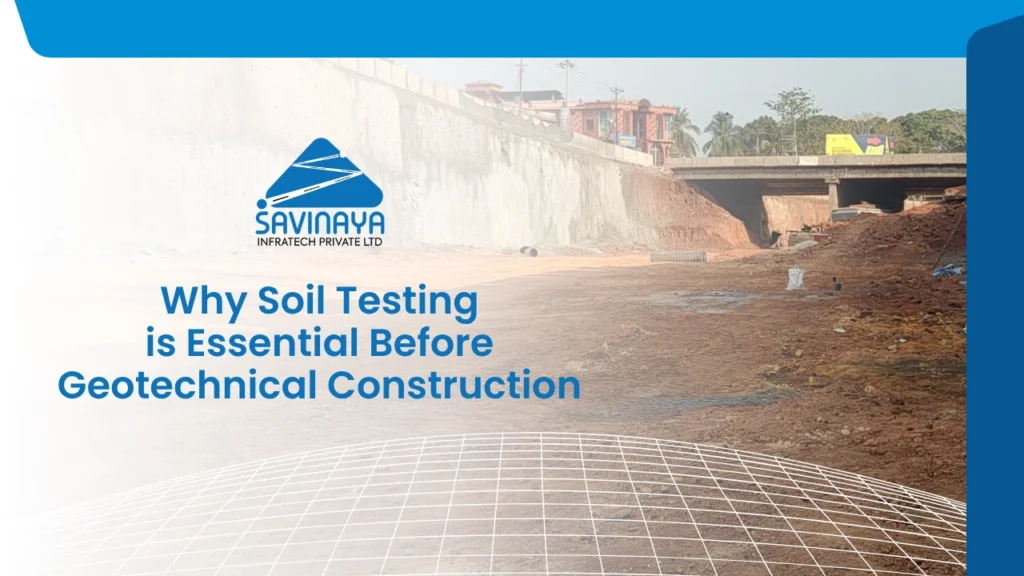
Every construction project begins with understanding the ground conditions on which the structure will stand. The soil beneath a building, road, or bridge directly affects its stability and long-term performance. Without proper analysis of soil properties, construction projects may face structural issues, settlement problems, or even failure.
This is where soil testing becomes a key step in project planning. Through detailed geotechnical soil testing, engineers evaluate soil characteristics, strength, moisture content, and load-bearing capacity before starting construction.
Understanding the importance of soil testing helps engineers design safe foundations, reduce risks, and improve project efficiency. In modern infrastructure development, soil investigation for construction is one of the first steps before any major geotechnical or structural work begins.
Key Takeaways
- Soil testing helps engineers understand ground conditions before construction begins.
- The importance of soil testing lies in improving safety, stability, and foundation performance.
- Geotechnical soil testing helps identify load-bearing capacity, groundwater levels, and soil strength.
- Early soil investigation for construction helps reduce delays, repairs, and long-term costs.
- Skipping soil testing for construction can lead to settlement, slope failure, and structural damage.
- Proper soil test report for construction supports better design decisions and regulatory compliance.
What Is Soil Testing?
To understand the importance of soil testing, it is necessary to know what soil testing is and how it supports construction projects. The soil testing definition refers to the process of analyzing soil properties through field investigations and laboratory tests. These tests determine the physical and mechanical characteristics of soil, such as strength, density, permeability, and moisture content.
In soil test in civil engineering, engineers collect soil samples from the project site and conduct various tests to prepare a soil test report for construction. This report provides valuable information used in foundation design and structural planning. The main objective of soil testing is to evaluate the soil conditions so that safe and efficient construction methods can be selected.
Why Soil Testing Is Important in Geotechnical Construction?
The importance of soil testing becomes clear when engineers analyze the role soil plays in supporting infrastructure. Buildings, roads, bridges, and retaining structures rely on soil to transfer loads safely to the ground.
Through geotechnical soil testing, engineers identify the strength and stability of the soil before construction begins. This information helps determine the most suitable construction techniques and foundation systems. Proper soil investigation also helps engineers anticipate potential geotechnical challenges and plan solutions in advance.
1. Ensuring Structural Stability and Safety
One of the major importance of soil testing is improved structural stability. The results from soil testing for construction help engineers determine the load-bearing capacity of the soil.
With this information, engineers can design foundations that safely transfer structural loads to the ground. Without accurate soil investigation ,structures may face settlement or instability issues
2. Preventing Long-Term Structural Distress
Structures built on weak or poorly understood soil conditions may experience cracking, uneven settlement, or foundation damage over time.
Through proper geotechnical soil testing, engineers identify soil characteristics that could lead to long-term structural distress. The insights from a soil test report for construction help prevent future maintenance problems and structural failures.
3. Cost Efficiency
The importance of soil testing also extends to project cost management. By conducting soil testing for construction early in the planning stage, engineers can avoid costly design changes and structural repairs later.
Identifying soil conditions through soil investigation helps project teams plan the correct foundation type and construction approach. This reduces unnecessary expenses and improves project efficiency.
4. Optimizing Foundation Design
Foundation design depends heavily on soil conditions. Different soil types require different foundation systems.
The results from soil testing methods for construction help engineers determine the most suitable foundation type, such as shallow foundations, pile foundations, or raft foundations. Accurate geotechnical soil testing allows engineers to optimize foundation design while maintaining safety.
5. Reducing Risk of Slope Failure
Slope stability is a critical concern in infrastructure projects located in hilly or mountainous regions. Weak soil conditions can increase the risk of landslides or slope failures.
Through detailed soil investigation for construction, engineers can evaluate slope stability and determine the need for reinforcement methods such as soil nailing or retaining structures. Understanding the importance of soil testing helps reduce the risk of slope-related failures.
You may also read: How Does Soil Nailing Help Stabilize Slopes and Prevent Landslides?
6. Identifying Water Table
The presence of groundwater can significantly affect construction activities. High water tables may weaken soil strength and create challenges for foundation construction. Through geotechnical soil testing, engineers determine groundwater levels and assess their impact on construction. This information helps in planning drainage systems and selecting suitable foundation methods.
7. Chemical Analysis
Soil may contain chemicals that affect the durability of construction materials such as concrete and steel. Chemical testing during soil investigation identifies harmful substances such as sulfates or chlorides.
Understanding soil chemistry through soil testing for construction helps engineers select materials that can withstand environmental conditions.
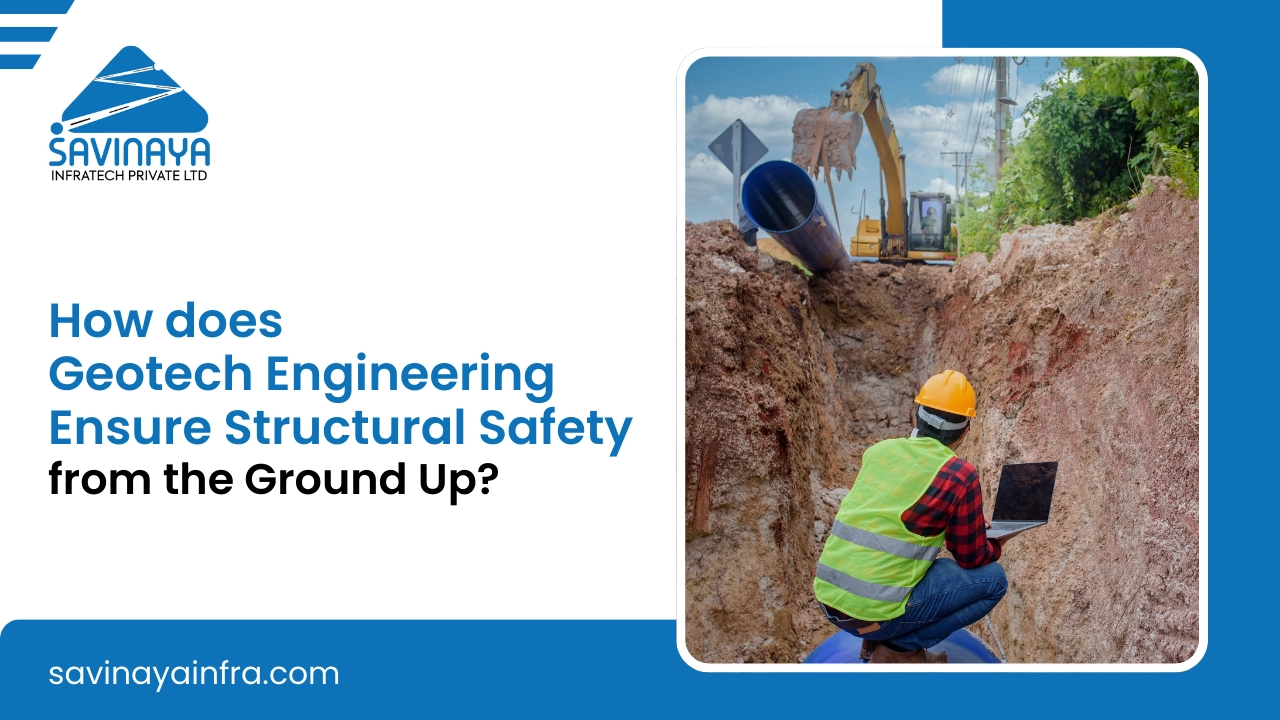
You May Also Read: How Does Geotech Engineering Ensure Structural Safety from the Ground Up
8. Mitigating Geotechnical Risks
Construction projects face several geotechnical risks including settlement, erosion, and slope instability. The importance of soil testing lies in its ability to identify these risks before construction begins. Through proper geotechnical soil testing, engineers can design preventive measures that improve safety and project reliability.
9. Regulatory Compliance & Safety
Many infrastructure projects must follow national construction standards and safety regulations. Conducting soil test in civil engineering ensures that the project meets required geotechnical guidelines. A detailed soil test report for construction is often required for regulatory approvals and project documentation.
10. Identify Fill Materials
In many projects, soil from excavation may be reused as fill material. Through soil testing methods for construction, engineers determine if the soil is suitable for compaction and structural support. This analysis is part of the broader soil investigation for construction process and helps ensure that the fill materials meet engineering requirements.
Things to Consider Before Soil Testing
Before starting soil testing, engineers consider several important factors:
- Site location and terrain conditions
- Type of structure planned for construction
- Expected structural loads
- Groundwater conditions
- Soil variability across the site
These factors help determine the scope and methods used in geotechnical soil testing.
You may also read: How Does Geotech Engineering Ensure Structural Safety
Common Soil Testing Methods for Construction Used in Geotechnical Projects
Several soil testing methods for construction are used to analyze soil properties in geotechnical engineering.
- Standard Penetration Test (SPT): Used to determine soil strength and density.
- Cone Penetration Test (CPT): Provides detailed information about soil stratification and resistance.
- Atterberg Limits Test: Used to determine the plasticity characteristics of fine-grained soils.
- Compaction Test : Evaluates the optimum moisture content and maximum dry density of soil.
- Shear Strength Tests: These soil testing methods for construction help engineers prepare accurate reports and design stable structures
6 Major Risks of Skipping Soil Testing
Ignoring the importance of soil testing can lead to serious construction problems.
- Foundation settlement and structural instability
- Unexpected construction delays
- Increased repair and maintenance costs
- Slope failure or landslides
- Poor drainage and groundwater problems
- Structural damage to buildings and infrastructure
Conducting soil testing for construction helps prevent these risks and ensures safer project outcomes.
Choose Savinaya Infratech As Your Geotechnical Engineering Services Provider
Savinaya Infratech provides specialized geotechnical engineering services for infrastructure and construction projects. The company works on solutions such as slope stabilization, soil nailing, retaining structures, rockfall protection solutions, and ground improvement.
Through professional soil investigation and engineering assessment, the team supports projects that require reliable geotechnical solutions. These services help engineers understand ground conditions before construction begins.
By combining site evaluation with engineering expertise, Savinaya Infratech assists infrastructure projects that require soil investigation for construction and geotechnical stabilization solutions. Get in touch with us to discuss your project needs.
Conclusion
Understanding the importance of soil testing is fundamental to safe and successful construction projects. Through detailed geotechnical soil testing, engineers evaluate soil properties and identify potential risks before construction begins.
From foundation design to slope stability and groundwater analysis, soil testing for construction plays a major role in ensuring structural safety and project efficiency. Proper soil investigation for construction allows engineers to make informed decisions and reduce long-term risks.
As infrastructure projects become more complex, reliable soil testing methods for construction remain a key part of modern geotechnical engineering practices.