
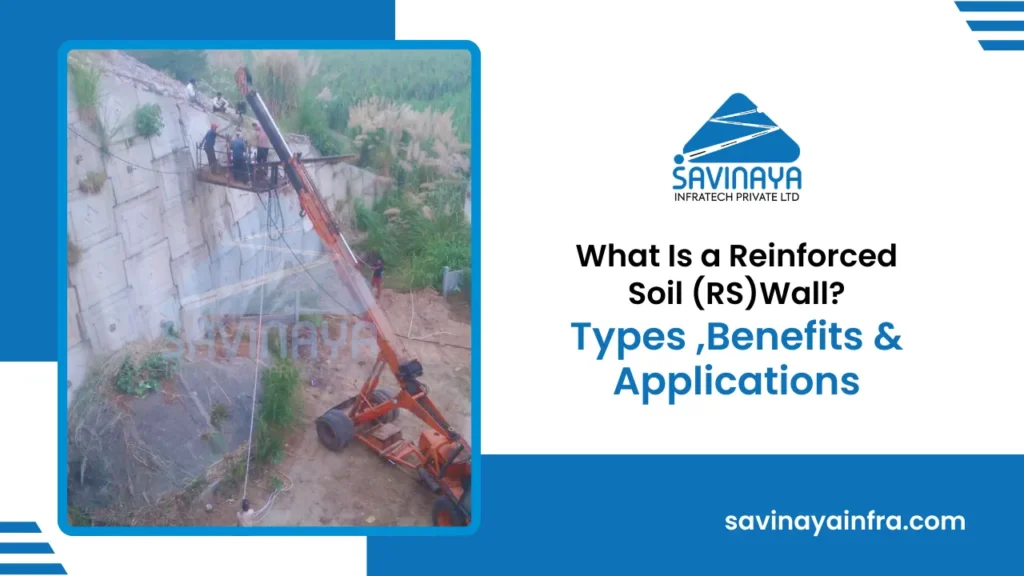
Modern infrastructure projects demand structures that are strong, durable, and efficient to build. In highway corridors, bridge approaches, rail embankments, and urban developments, retaining structures play a major role in supporting soil and maintaining stability. One system that has gained wide acceptance in civil engineering is the reinforced soil wall.
Engineers and contractors rely on this method to build stable retaining structures that handle heavy loads and varying ground conditions. From transport infrastructure to industrial sites, reinforced soil walls offer a practical solution that combines soil and reinforcement materials to create a reliable retaining system.
This article explains what a reinforced soil wall is, how it works, the different types of reinforced soil walls, their advantages, and where they are commonly used.
Key Takeaways
- Reinforced soil walls combine compacted soil with reinforcement materials for strong retaining structures.
- Reinforcement layers such as steel strips, geogrids, or geotextiles strengthen the soil mass.
- Facing panels or modular blocks hold the reinforced soil in place and provide structure.
- Common types include mechanically stabilized earth walls, geogrid walls, modular block walls, and panel walls.
- Reinforced soil walls offer strong stability, cost efficiency, and faster construction.
- These systems can handle minor ground movement without major structural damage.
- Reinforced soil walls are widely used in highways, bridge approaches, railways, and urban infrastructure.
- Proper design and maintenance help reinforced soil walls perform reliably for many years.
Table of Contents
What Is a Reinforced Soil Wall?
A reinforced soil wall is a retaining structure made by combining compacted soil with reinforcing materials such as steel strips, geogrids, or geotextiles. The reinforcement strengthens the soil mass, allowing it to support vertical or near-vertical faces.
In simple terms, the system transforms soil into a strong structural element. With the addition of reinforcement layers and facing units, the soil mass behaves as a single composite block capable of resisting pressure from the retained earth.
In many projects, these structures are also referred to as RE walls, reinforced earth walls or reinforcement earth walls. The construction process that creates these structures is commonly called RE wall construction or reinforced earth wall construction. When designed properly through reinforced soil wall design or RE wall design, the structure performs reliably for decades.
How Reinforced Soil Walls or RE Walls Work?
The working principle of reinforced soil walls is based on the interaction between soil and reinforcement materials. Layers of reinforcement are placed within compacted soil during construction. These layers provide tensile strength to the soil mass.
The reinforcement prevents the soil from moving outward due to pressure. At the front of the wall, facing elements such as concrete panels keep the soil contained and provide a finished appearance.
In many RE wall construction projects, modular facing units like RE wall panel systems are used. These panels connect with reinforcement layers embedded inside the soil. This combination allows the structure to distribute loads efficiently. The reinforced soil mass behaves like a gravity block, resisting sliding, overturning, and other forces.
Main Components of Reinforced Soil Wall
A reinforced soil retaining wall consists of several key components that work together to maintain stability.
1. Facing Units
The visible front surface of the wall is made from concrete panels or modular blocks. These units often include RE-wall panels or Block-wall systems.
2. Reinforcement Layers
Steel strips, geogrids, or geotextiles are placed between soil layers to provide strength. These reinforcements tie the soil mass together.
3. Backfill Soil
Selected granular soil is used to build the reinforced zone behind the facing units. Proper compaction improves performance.
4. Drainage System
Drainage layers or pipes prevent water buildup behind the wall, which helps maintain stability.
You May also Read: What are the Early Signs of RS Wall Failure on Infrastructure Projects
Types of Reinforced Soil Walls
Several types of reinforced soil walls are used in infrastructure projects, depending on design needs and site conditions.
1. Mechanically Stabilized Earth Walls
These walls use steel strips or geosynthetic reinforcements embedded in soil. They are widely used in reinforced soil wall construction for highways and bridge approaches.
2. Geogrid Reinforced Walls
Geogrids are polymer materials placed in layers within the soil. They improve tensile strength and provide stability for high retaining structures.
3. Modular Block Walls
These systems use interlocking blocks as the facing material. They are commonly used in landscaping and smaller infrastructure works.
4. Panel-Based Walls
Large concrete panels form the front face of the structure. These RE wall panels are widely used in large-scale reinforced earth wall construction projects. These systems represent the most common types of RS walls used across transportation and infrastructure sectors.
You May Also Read: How Soil Nailing Restores Failing Reinforced Earth Walls
Benefits of Reinforced Soil Walls
Engineers often select reinforced soil walls due to their strong performance and cost efficiency. Some key advantages of RS walls include:
1. High Structural Stability
The reinforced soil mass provides strong resistance against earth pressure.
2. Cost Efficiency
Compared with traditional concrete retaining structures, RE walls can reduce construction costs.
3. Faster Construction
The installation process for the RS wall is relatively quick & fast
4. Flexibility
The structure can accommodate minor ground movement without major damage.
5. Long Service Life
When designed correctly using reinforced soil wall methods, the structure can perform reliably for many years. These points highlight the main benefits of RS wall systems in infrastructure development.
Where Are Reinforced Soil Walls Used? (Applications)
There are many applications of RS walls in modern infrastructure projects.
- Highway Embankments: Reinforced soil retaining wall systems support roads and elevated embankments.
- Bridge Approaches: Many bridge projects use RE wall systems to support approach ramps.
- Railway Infrastructure: Railway corridors often include RE walls to stabilize slopes and track foundations.
- Industrial Developments: Factories and logistics parks use these systems for site grading and boundary retaining structures.
- Urban Infrastructure: City road expansions and flyover construction frequently include reinforced soil walls.
When Should You Choose Reinforced Soil Wall Repair Contractor for Project?
Over time, some retaining structures may exhibit wear, settlement, or damage. In such cases, engaging an RS wall repair contractor becomes important. Repair and strengthening work may be required when there are signs of panel displacement, drainage problems, soil erosion, or structural distress.
Professional inspection helps identify the root cause and determine suitable strengthening methods. Specialized contractors can restore structural integrity and extend the life of reinforced soil walls through repair, reinforcement upgrades, or drainage improvements.
Future of Reinforced Soil Wall Technology
Advances in geosynthetics, materials, and engineering practices continue to improve the performance of reinforced soil walls. Modern reinforced soil wall design methods now use advanced modeling tools that improve safety and efficiency. New reinforcement materials are also improving durability and load capacity.
With growing infrastructure development across highways, railways, and urban transport systems, reinforced soil wall construction will continue to play a major role in civil engineering projects.
How Savinaya Infratech Repair & Strengthening RS Walls for Your Project?
Savinaya Infratech provides specialised services for the repair and strengthening of reinforced soil walls or RE walls used in infrastructure projects.
Their team evaluates structural conditions, identifies problem areas, and develops practical solutions for restoring stability. Services may include panel correction, reinforcement upgrades, drainage improvement, and structural strengthening.
With experience in reinforced soil wall repair & strengthening services, the company supports the long-term performance of existing reinforced earth wall systems across highways and infrastructure sites.
Conclusion
The reinforced soil wall system has transformed the way retaining structures are built in modern infrastructure. By combining soil with reinforcement materials, engineers create stable, durable, and cost-effective retaining systems.
From highways and bridges to railways and industrial developments, the applications of RS walls continue to grow. With ongoing advancements in materials and design methods, reinforced soil walls will remain a trusted solution in civil engineering for years to come.
Frequently Asked Questions
1. What is the difference between an RS wall and MSE wall?
In most engineering discussions, an RS wall and an MSE wall refer to the same type of structure. RS stands for reinforced soil wall, while MSE means Mechanically Stabilized Earth wall. Both systems combine compacted soil with reinforcement materials such as geogrids, steel strips, or geotextiles to create stable retaining structures. These structures are also known as reinforced earth walls in many infrastructure projects.
2. Are reinforced soil walls suitable for high embankments?
Yes, reinforced soil walls are widely used for high embankments in highway and railway infrastructure. With proper design and correct material selection, these walls can support significant heights while maintaining stability. Many large transport projects use RE walls to support bridge approaches and elevated road sections.
3. Are reinforced soil walls earthquake-resistant?
Yes, reinforced soil walls perform well in seismic zones. The flexible structure of a reinforced soil retaining wall allows it to absorb and distribute seismic forces more effectively than rigid concrete retaining walls. Proper RE wall design and engineering analysis help improve performance in earthquake-prone regions.
4. What are RS walls used for?
RS walls are used to retain soil and support embankments in many infrastructure projects. Common applications of RS walls include highways, bridge approaches, railway embankments, flyovers, industrial developments, and slope stabilization works. Many engineers use reinforced soil wall construction methods in transport infrastructure due to their efficiency and durability.
5. Are reinforced soil walls strong enough for heavy traffic loads?
Yes, properly designed reinforced soil walls can handle heavy traffic loads from highways, trucks, and railway systems. Engineers use advanced methods to calculate load distribution and stability. Many major highway corridors rely on RS wall construction to support roadways carrying high traffic volumes.
6. Can RS walls be repaired in hilly or difficult terrain?
Yes, repair and strengthening work can be carried out even in challenging terrain. Experienced teams, including an RS wall repair contractor, can restore damaged walls by improving drainage, correcting RE wall panels, stabilizing soil, and strengthening reinforcement layers. These repairs help improve performance in mountainous and difficult locations.
7. How long do reinforced soil walls last?
A well-designed reinforced soil wall can last for several decades. With proper reinforced soil wall construction, quality materials, and regular inspection, these structures often have a service life of 50 to 100 years. Maintenance and timely repairs by a professional reinforced soil wall repair contractor can further extend the life of reinforced earth walls used in infrastructure projects.